

Democrats say Republican plan is election-year stunt offering little relief
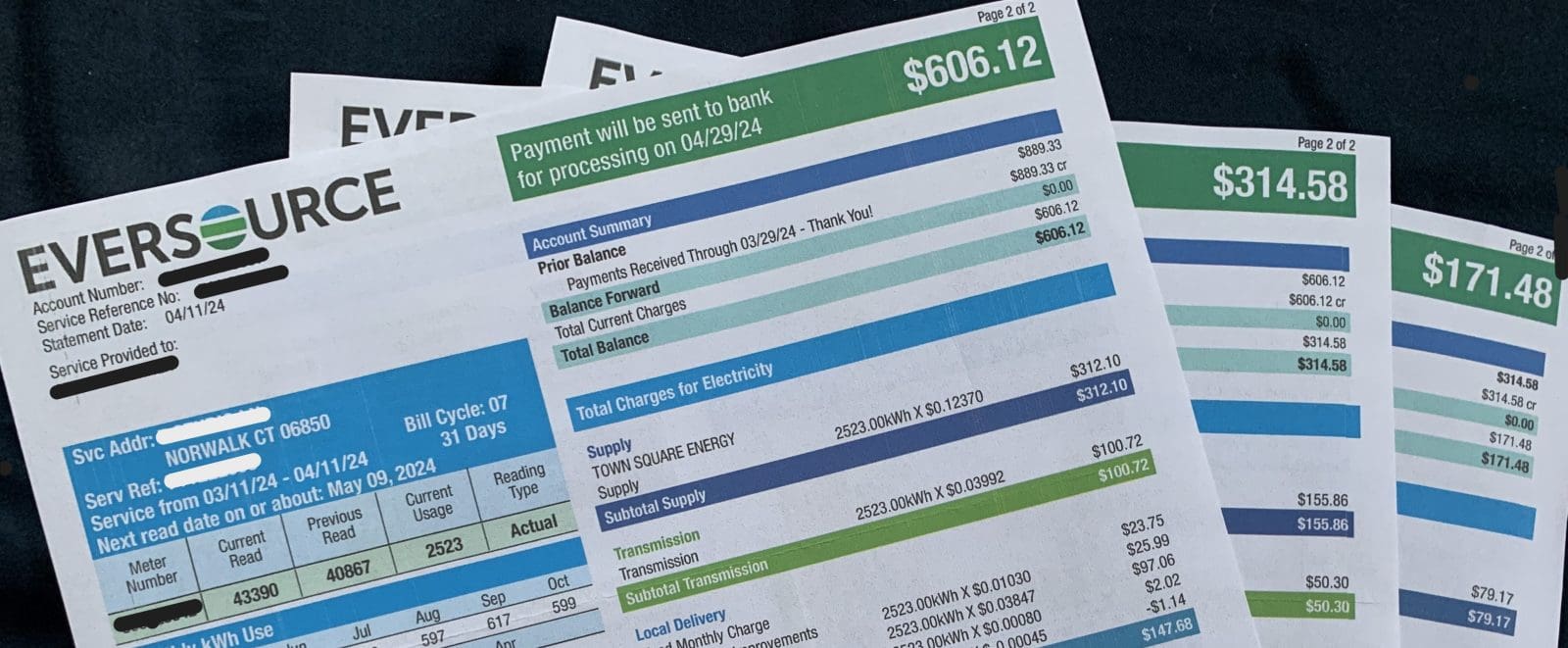
Republican state legislators are closing in on a strategy leaders say would chop $125 or more yearly off Connecticut residents’ rising electric bills.
But to finance this relief, the GOP would have to loosen its longstanding policy of strict adherence to the state budget controls, or “fiscal guardrails,” it often touts.
And Democratic leaders — who’ve sought to adjust these “guardrails” to invest in education and other core programs — say Republicans are conveniently embracing a double standard in a state election year.
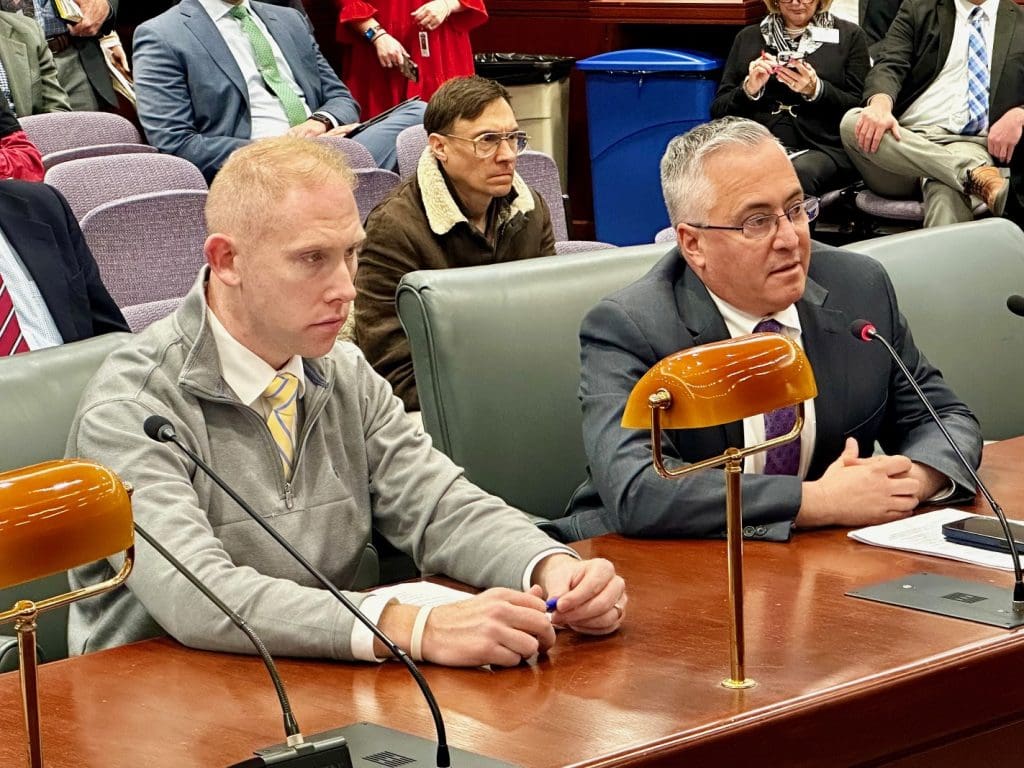
“I’m hearing from residents they cannot pay this bill. … This could not have hit people at a worse time,” said House Minority Leader Vincent J. Candelora, R-North Branford, who wants to use as much as $300 million from last fiscal year’s $1.6 billion state budget surplus to lower electric bills.
“If that’s political,” Candelora added, “then I’m guilty.”
Most electric customers face two hikes this year
Republicans, who first pitched state intervention in February to lower electric bills, intensified their efforts this summer after state utility regulators approved two changes.
The first, which took effect July 1, authorized Eversource to boost its rates by about 4%, adding roughly $7 to $8 to the typical residential customer’s monthly bill. With almost 1.3 million residential and business customers in Connecticut, Eversource serves the bulk of the state.
United Illuminating, which has about 341,000 residential and business customers in south-central and southwestern Connecticut, dropped rates by 1%, saving the typical household about $1.50 per month.
But earlier this month, state regulators approved another hike effective Sept. 1 as part of a nine-year plan launched in 2021 to establish a statewide electric-vehicle charging program.
This is expected to add another $3 per month to typical residential bills of both utilities.
With Connecticut already charging some of the highest electric rates in the nation, Republicans say the bill is crippling families — and state government can afford to take some pressure off.
GOP: CT’s coffers are large enough to help ratepayers
Thanks to an aggressive savings program that has barred legislators since late 2017 from spending a huge chunk of quarterly state income and business tax receipts, the state’s short-term fiscal position has improved radically.
A meager $212 million budget reserve, equal to about 1% of the General Fund, now stands at $3.3 billion. And about half of the $1.6 billion left over from last fiscal year also is headed for the rainy day fund, which would lift it to a record-setting $4.1 billion or 18% of the General Fund, the maximum allowed by law.
The other half of the 2023-24 fiscal year surplus would be used to pay down Connecticut’s huge pension debt.
Both Candelora and Harding said legislators should consider meeting in special session this fall and redirecting about $300 million currently headed for the rainy day fund to instead mitigate electric rates.
The single-biggest factor driving the July 1 rates involves legislative directives that Eversource and UI purchase power from the Millstone nuclear plant in Waterford and a second nuclear facility in Seabrook, Maine, at guaranteed rates.
Eversource ratepayers collectively are being charged $600 million between now and the spring of 2025 to help the utility cover that expense.
A secondary, yet still significant, factor impacting electric bills involves hardship expenses both utilities face from customers who failed to pay bills. Those hardship expenses increased significantly between March 2020 and May 2024 when the legislature imposed special limits on utility shutoffs to help households deal with costs tied to the coronavirus pandemic.
Republicans are talking about using roughly $215 million from last fiscal year’s surplus to mitigate that hardship expense. And they also want to dedicate roughly $80 million more to neutralize the electric vehicle program’s impact on bills over the next year.
Candelora and Senate Minority Leader Stephen Harding, R-Brookfield, both said that by the state paying these shares of the utility bill, residential customers would save, on average, about $125 per year.
“We at least have to examine if some aspect of that surplus could be used to offset that” electric bill, Harding said. “I think it makes perfect sense.”
GOP would have to maneuver around the ‘guardrails’
There’s just one problem with that.
State rules don’t normally allow for budget surplus to be used this way. They could be adjusted, but Republicans traditionally have argued they should not be changed.
Any surplus funds are supposed to build the rainy day fund or pay down pension debt. The rainy day fund is full, but there still is plenty of pension debt to go.
Even though the state used another $7.7 billion from surpluses to whittle down debt between 2020 and 2023, Connecticut entered this year with about $37 billion in unfunded pension obligations.
Legislatures and governors failed to save properly for pensions promised to state employees and municipal teachers for more than seven decades prior to 2011, creating a huge mess that analysts say will strain state finances well into the 2030s or later.
Republicans have reminded Democrats, who control both the state House and Senate, of these long-range challenges repeatedly in recent years. The majority party has argued the rules don’t allow for sufficient investments in education, social services, health care, municipal aid and other core programs.
Why is it OK to take funds headed for the budget reserve — which normally is used only during a recession to prevent tax increases or deep program cuts — to lower electric bills, Democrats asked.
Republicans have had “almost a religious adherence to the guardrails, and now, two and a half months before the election, they’re willing to jettison it for something they think will give them a political advantage,” said Senate President Pro Tem Martin M. Looney, D-New Haven. “They’re basically taking a position of convenience.”
House Speaker Matt Ritter, D-Hartford, also has been the target of GOP attacks for insisting Connecticut could afford to invest more in core programs and still achieve healthy surpluses to build reserves and pay down pension debt.
Ritter said Democrats are very concerned about electric rates and related issues and will focus on them closely when the 2025 session starts in January.
But Ritter noted the Republicans would circumvent the guardrails and pay $300 million to electric companies to save families — by the GOP leaders’ own estimates — about $12 per month. And the speaker said his office believes the actual savings would be closer to half of that amount.
“It fails the common-sense test,” Ritter said, adding that he believes Republicans are groping for an issue because their presidential nominee, Donald Trump, is projected to run very poorly again in Connecticut. “When you are desperate for an issue, you propose things that don’t make sense.”
Democrats circumvented budget rules in recent years
But Candelora and Harding fired back that the GOP is not abandoning the budget controls and that the charge of election-year gamesmanship is unfair and ironic. Democrats, not Republicans, are practicing a double standard, Republicans counter.
Democratic legislators continue to shift huge surplus dollars annually from one fiscal year to the next as part of a complicated procedure to work around the state spending cap. More than $1 billion in carry-forwards have been ordered across this fiscal year and the prior three.
Democrats also adjourned the regular 2024 session in early May despite warnings that the $26 billion budget adopted for the 2024-25 fiscal year had left several programs inadequately funded, despite a state constitutional provision requiring lawmakers to adopt a balanced budget.
Given this history, Candelora added, to suggest this ratepayer assistance plan is election-year politics “is offensive to the minority party and to the ratepayers who are stuck trying to pay this bill.” The House GOP leader also has argued repeatedly in recent years to modify the guardrails to allow a portion of surplus funds to be used to benefit taxpayers’ households directly.
But Looney noted that Democrats’ recent budgets have been focused heavily on helping working families to save, yet Republicans still opposed them. Investments in community college and four-year state universities were designed to stem tuition and fee hikes, while lawmakers also have prioritized programs to ensure affordable child care remains available.
Spokeswomen for Eversource and UI didn’t take positions this week on the political back-and-forth on ratepayer assistance efforts.
But Gov. Ned Lamont, a fiscally moderate Democrat who also has been very reluctant to modify state budget rules, has expressed interest in a special session this fall to address electric rates, though he hasn’t outlined any specific measures.
“Gov. Lamont agrees that Connecticut residents are paying too much for electricity and has said he would be open to considering practical solutions to help lower costs in a special session,” Lamont spokeswoman Julia Bergman said. “This is not a partisan issue, as we agree that we need a solution to lower energy costs.”
This article was originally published in the CT Mirror on August 23, 2024, and is reprinted with permission.


Leave a Reply
You must Register or Login to post a comment.