

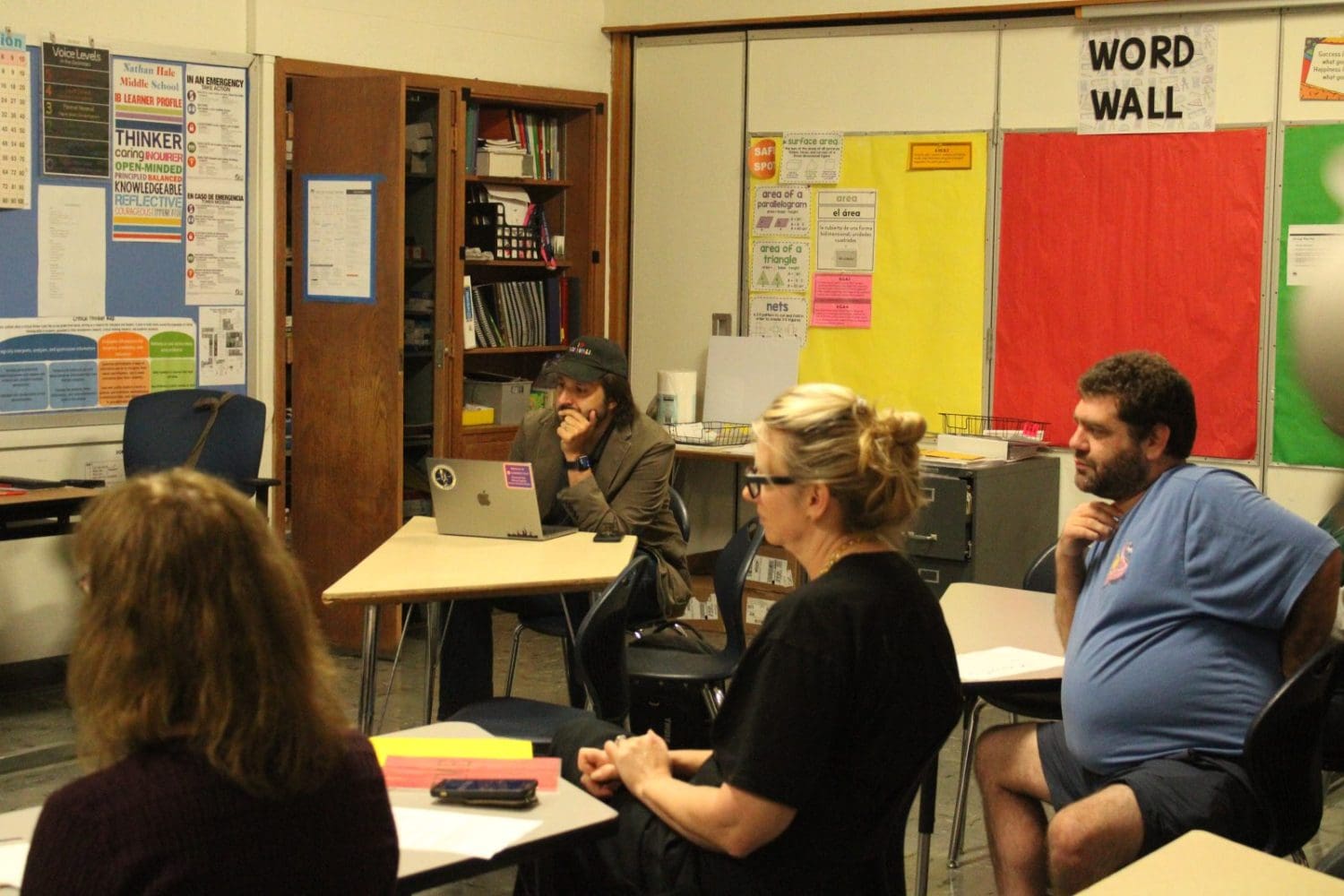
This is Part 3 in Nancy on Norwalk’s coverage of the Oct. 6 Common Council candidate forum hosted by the League of Women Voters of Norwalk in partnership with Norwalk Acts. NancyOnNorwalk served as media sponsor.
Managing Editor Ashley Smith posed several questions to at-large candidates when time allowed and with audience approval. One rotation concluded before a question could be asked.
Should the city be run as a for-profit business or as a service-based nonprofit?
Ashley Smith (NancyOnNorwalk):
“I’ve noticed there are kind of two thoughts that people have in the city. One is that the city should be run as a for-profit business, while other people say it should be run as a service-based nonprofit. Which way would you want to run the city?”
Victor Coppola (Republican):
“I would say that the city should be run as a non-profit. Listen, all the money that the city gets comes from our pockets.
So I would say that the less we give to the city to fund all the services — fund them properly — the better.
I mean, because every year, when you pay the government taxes, do you want to pay them more than you owe, or what you owe?
That’s the way I would look at it. So I would run the city as a not-for-profit and try and keep as much money in taxpayers’ pockets.”
Lisa Brinton (Independent):
“Government — we’re not trying to make money. So it’s a not-for-profit. You know, X amount of money is collected from our various tax sources, right? And you try to do as much as you can for as many people as you can with the money that you got. That’s it.
Is it a for-profit business for certain special interests? Yes, it is — for developers who get tax abatements, for law firms that make a lot of money off of us.
So there are, you know, in cities — and when you’ve got small cities or small states like Connecticut — John Stewart once said that Connecticut was a place you drove through on your way to two real cities.
Connecticut has not necessarily been great in terms of having its businesses and stuff…
And so the business we seem to be in right now is development, and it seems to be doing very profitably for those folks.
But no, you bring out X amount of revenue, and you try and provide as many services for as many people as you can. And that’s it.”
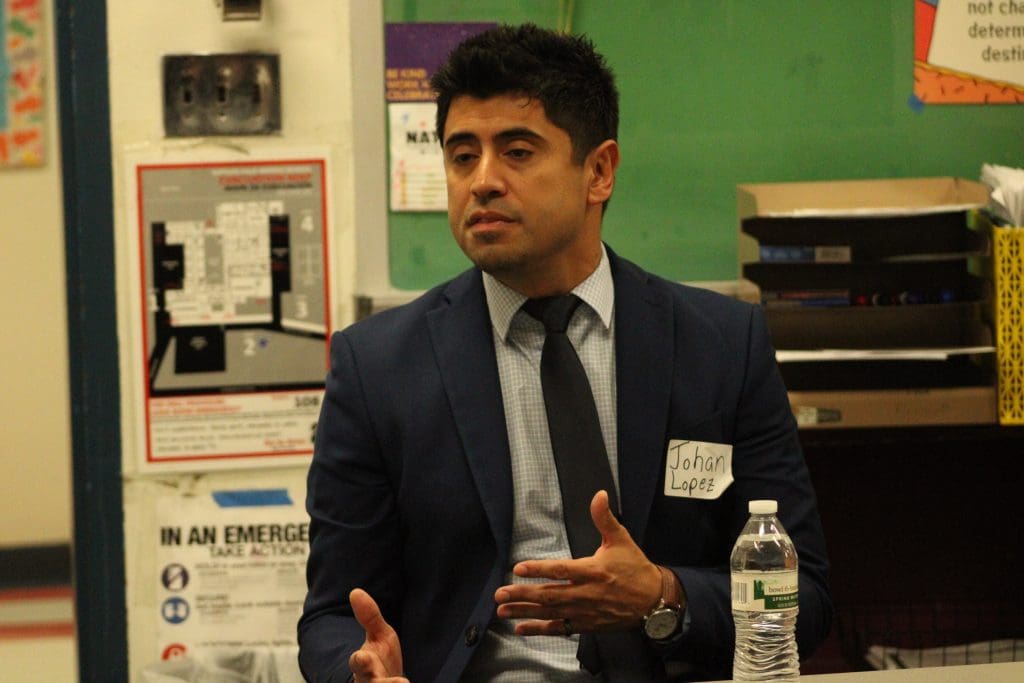
Johan Lopez (Democrat):
“It’s a combination, right? I mean, there are business principles that have to really be used, because there’s money that’s involved, but at the same time, there’s a nonprofit aspect, which is you’re serving.
So you have to be able to have private-sector business acumen and also that level of knowledge when it comes to serving. So I would say tif there’s a Venn diagram, the city is right in the center.”
How should Norwalk balance the need for tax revenue with residents’ desire for less density?
Ashley Smith (NancyOnNorwalk):
“Studies show that dense urban centers are kind of needed to subsidize the suburban areas. Most cities make most of their taxes from dense urban centers versus suburbia. But a lot of Norwalkers don’t really like idea of having a dense urban center. So how do you balance the need for more tax dollars with the want of having less dense urban centers?”
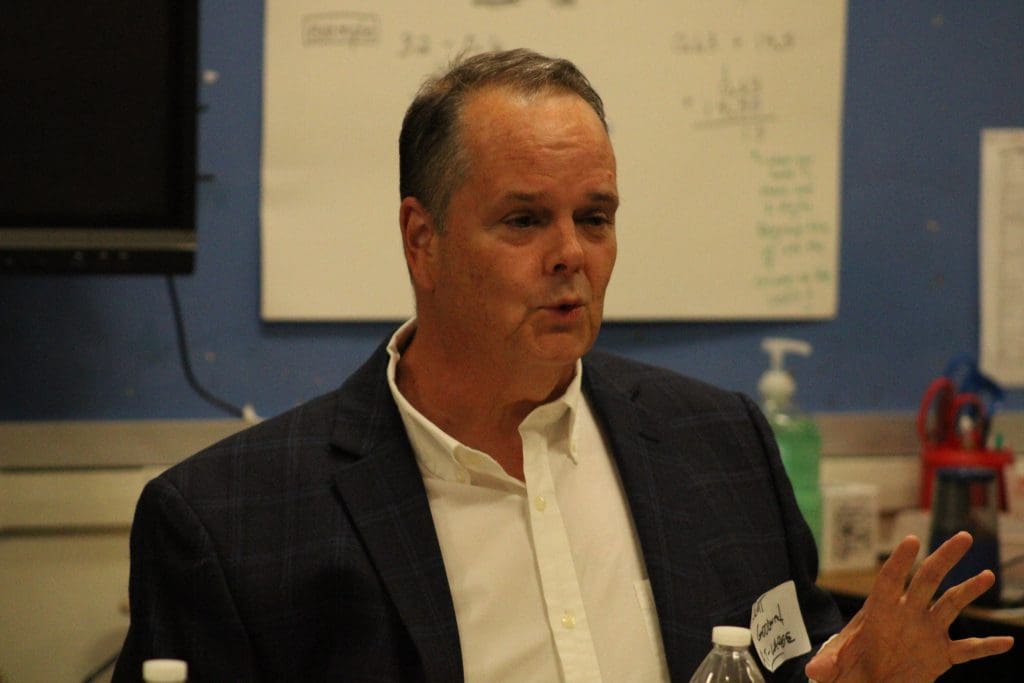
Scott Goodwin (Independent):
“I think, to your point, people bought into this town because we liked the way this town was.
And so when you’re introducing the notion of adding density to the town — and in my case, suddenly getting 2,000 neighbors between me and I-95 in less than a mile stretch of road — that isn’t what I bought my house for.
And so I do have an issue with that, but the reality is too, business taxes have gone down in this town.
And I think Colin brought up a good point, so I’m going to throw this one to him. But in the prior session, he pointed out that right now all the sales taxes that we collect at Target — and all of the many revenue-generating sources that people come to Norwalk for — go to Hartford, not to Norwalk, and we need a piece.”
Colin Hosten (Democrat):
“I think that there’s a lot of data that shows that condensed urban development has a fantastic impact on the city.
The way I would balance it — and I try to spell it too — there’s been more resistance to it, but it’s related to quality of life.
Guess what gets traffic down? People living in places they can walk. That needs density.
We need people to be able to say, ‘I’m just going to walk down to the store, walk, use my bike.’ That gets cars off the road.
Guess what’s getting cars on the road? A single-family home around the state.
So it’s a tax question, but it’s also a livability question. We get more people living in these transit-priority, walkable neighborhoods — livable cities — that’s the way we use that.”
Rev. Johnny Cardimone (Republican):
“I was in retail banking for 16 years. Banks obviously loan money to small businesses. Small businesses are the engine of America.
People want to invest themselves in things.
We live in a city now — it’s not the little town we grew up in.
We see what’s going on in Boston.
I went to a meeting at 67 Wall Street — 50 people were there, builders, merchants, and so forth — and they were asked by the state, ‘What can we do to help you?’
And you know what the answer was? Get out of the way.
People want to do things, they want to invest, they want to better the community. It can be done in a setting that still takes into consideration the needs of infrastructure and pedestrian safety as well.”
How can the city ensure its tax burden doesn’t fall on lower-income residents?
Ashley Smith (NancyOnNorwalk):
“I’ve heard candidates talk about getting more funding through commercial property taxes or even sales taxes, but both of those put more of the tax burden on lower-income individuals. Apartments are typically taxed as commercial properties. So how would you make sure that the tax burden doesn’t fall on those who make the least?”
Chris Dwyer (Unaffiliated):
“I’d like to have a housing conversation that’s focused on a couple of things.
One is renters. My understanding is that in our development process, we have a certain way we calculate the amount of affordable units that are built — built in construction.
The leasing companies and landlords are the ones that set the price.
We live in a casualistic society.
They’re going to make as much money as they can, so we need to go to the leasing companies and start making deals with them instead of the construction companies. We need tax exemptions for them.
We need to — I really think it’s that simple for our affordable housing.
We’re using state median income versus area median income. That state median income actually pushes affordable housing a little bit lower than AMI. If we use AMI, we would have better housing for people who make less.”
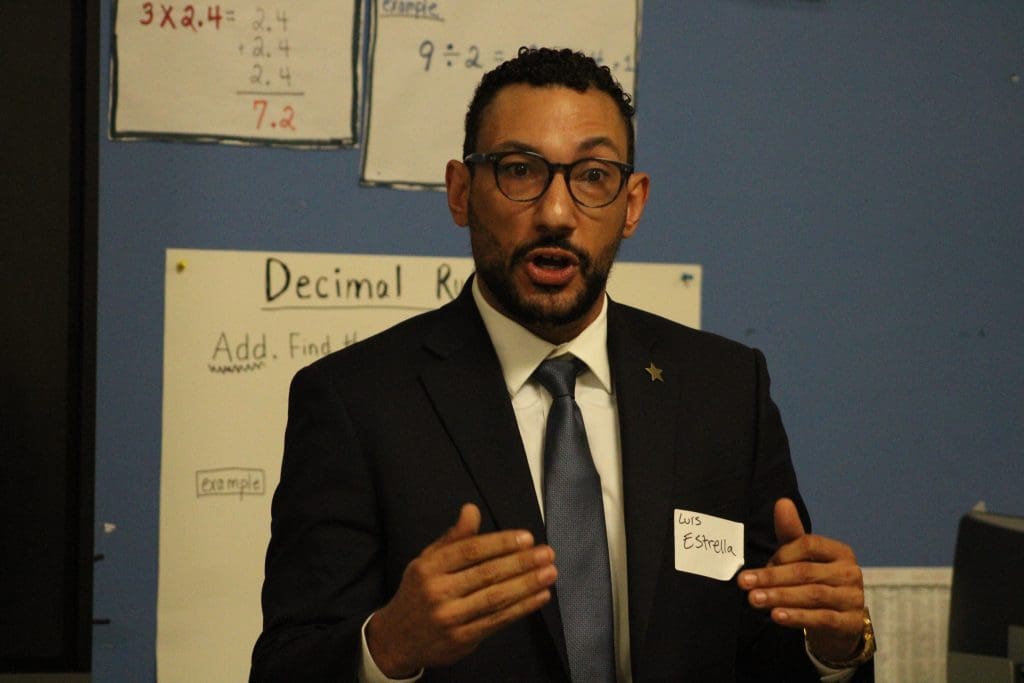
Luis Estrella (Republican):
“I don’t specifically know how I would target lower-income people.
I would just try to help developers — decent companies — keep the material as inexpensive as possible, keep the permit processes and all the taxes they pay that go toward the state as minimal as possible.
We can’t tell them what to charge, but we can help and try to make sure the process doesn’t add more cost.
As elected officials, our job is to help, not to try and get people to do what we want. So we can help developers remember that if they can keep their expenses cheaper, maybe that helps us too.”
Josh Goldstein (Democrat):
“The goal here is two things.
One, we want to make sure we’re growing our commercial sector. That doesn’t just mean by apartment. That also means growing underutilized business space.
Because one of the things that happened in the pandemic — a lot of business downsized — and now we’ve had a revolution two years ago where the tax base is lopsided.
About 70 percent of our taxes come from residential, 30 percent from commercial.
We need to even that out.
The way to do that is by bringing in more businesses so that we can actually grow business here at home, get commercial tax revenue that isn’t wholly dependent on apartments.
We can become a bigger economic powerhouse — that’s the goal.”
Takeaways
The at-large candidates’ answers to NancyOnNorwalk’s questions highlighted differing views on city management, growth, and taxation as the Nov. 4 municipal election approaches.


Leave a Reply
You must Register or Login to post a comment.