

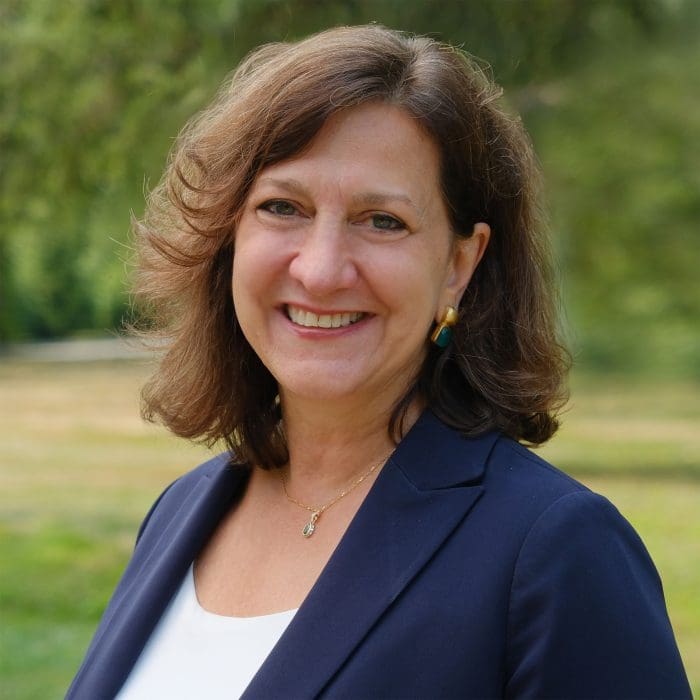
Scott Goodwin
Candidate for Common Council At-Large
Party Affiliation: Independent
Why are you running for Common Council At-Large, and what do you hope to accomplish if elected?
I’ve lived in Norwalk for 20 years and have seen the city change significantly in that time – some good, some not. But in just the last year, we’ve seen multiple avoidable budget crises: one led to a school funding cliff, where leadership put teachers on the chopping block instead of planning for it. And when leadership realized last year that our commercial tax base had eroded over the last decade, they threatened us with losing fire & police services unless we accepted 10% to 37% property tax hikes.
At the same time, they’re insisting that we need to fast-track more luxury apartments, which will add to the infrastructure burden and provide little relief to seniors who increasingly find it too expensive to stay in their homes.
I’m running as an Independent Party candidate to provide an alternative perspective to the issues Norwalk faces versus the groupthink that comes from 14 of 15 Council and 10 of 10 Board of Education positions being held by a single party. And I’m running to add a level of oversight and data-driven proactivity that we need for a city of Norwalk’s growing size.
What does it mean to represent the entire city “at-large” as opposed to a specific district? How will you ensure all neighborhoods are heard?
By representing the city “at-large,” it means that those council members need to be more aware of the unique challenges each neighborhood faces, in addition to the overarching concerns of the city (or just our home district). As we’ve seen, while all the districts have concerns and issues with flooding, density and quality-of-life issues, more specific concerns will vary for the different neighborhoods. Even in District C, where I live, East Norwalk has different concerns than the Wolfpit neighborhood.
To ensure residents from all neighborhoods are heard, in addition to the existing formal channels, I’ll establish regular office hours, attend periodic neighborhood association meetings with the different groups around town, and set up a quarterly in-person forum where I’ll publish.
What are the top three issues you believe Norwalk needs to address in the next two years, and how would you approach them?
- Addressing responsible, measured residential growth – Growth should match our infrastructure and ability to support without further degrading the quality of life for residents. I’d advocate for approvals to be tied to public works with real benefits to the community – funding schools and teachers, sewer and drainage improvements, traffic improvements, green spaces and walk/bike lanes instead of vague nonsense like “pollinator pathways” – developer-speak for a flower bed outside their high-rise.At the same time, I’d push to explore additional ways to address affordable housing, including diversifying housing types for ADUs and senior housing.
- Education Funding – Norwalk Public Schools are the largest part of the city’s operating budget, and growing with the push for increased housing density. I’d work on a two-pronged approach to stop the budget whiplash: Implement a 3-year rolling forecast, jointly owned by the Council and Board of Education, with early warnings if we’re off track – and publish results in a quarterly dashboard, just like companies do to keep their investors up to speed. As part of that, I’d prioritize classrooms, teachers and students vs. the army of administrators. Second, I’d aggressively lobby the state for equitable ECS funding. Hartford can’t push for greater density in the city without fairly compensating Norwalk for our student demographics.
- Transparency – Over the last few years, the incumbents often define and debate the issues above behind closed doors. As an Independent candidate, I’d push for more open budgets, accessible meetings, where Council members show up in person for the public, while allowing residents to attend in-person and virtually based on their access. We’d publish detailed meeting notes that don’t require people to use Connecticut’s Freedom of Information Act to see the sausage being made. And I’d push to leverage digital data collection, then make the data available to citizen activists to give them greater access to surface their concerns and see how we’re using their budgets.
How would you balance the need for economic development with concerns about overdevelopment and infrastructure strain?
To my view, the overdevelopment and infrastructure strain seem tied to the explosion in luxury apartments, population growth and in West Norwalk, the big box retailers that clog the Post Road. Those don’t contribute as much to Norwalk’s economy, since sales taxes go to Hartford and rentals deliver lower per capita in property taxes vs the needs for city services. Over the last several years, Norwalk’s commercial property portion of the tax base has eroded from 34% to 28.5% of revenues. The city should streamline & fast-track permits for small & medium businesses with a 30-day yes or no target and public dashboards showing status & estimated completion timing. And we should absolutely go after Hartford for greater local tax sharing; if we’re going to be our neighboring towns’ shopping destination, we should get some benefit in exchange for that congestion on our roads.
What’s your stance on affordable housing in Norwalk? What policies or zoning reforms do you support or oppose?
I support the need for affordable housing in a range of forms and understand why, for some, the growth in apartments seems like a solution. But this narrow lens that that focuses solely on market-rate development incentivizes developers to build thousands of luxury apartments and only requires 10% of those to be “affordable.” Using back-of-the-envelope math, this means we’d need to build 80,000 apartments, just to fill the need for 8,000 affordable units. And that does nothing for affordability for the seniors in Norwalk living on fixed incomes in homes they fully own, whose property taxes spiked 30% with last year’s tax hike. And the effort to upzone large chunks of the city last year do little for affordability when conglomerates and real estate investors snap up the properties and use as profit-seeking opportunities, artificially driving up rents. I’d support senior housing near services, expanding accessory dwelling unit opportunities and conversion of large empty commercial office space. And I’d push for registration, quantity caps and enforcement of short-term rentals (AirBnB, for instance), to ensure the housing supply is really used for our residents’ housing needs.
Do you support expanding public transit, pedestrian infrastructure, and bike lanes in Norwalk? Why or why not?
This is a no-brainer. I can’t imagine any candidate running for Common Council that doesn’t support expanded bike/walk infrastructure. This is one of the things I think our last administration has made a great start on. If anything, I’d say keep going and go farther, faster, since these are the kind of quality of life enhancements residents value.
How do you view the role of the Council in the city’s annual budget process? Would you support reforms to increase fiscal transparency or community involvement?
The Council currently sets the upper limits on spending and votes for capital expenditures, but leaves much of the details to the Board of Estimate & Taxation (BET) and the Mayor’s Office of Management and Budget (OMB). I think the Council needs to take a more active role in planning and oversight, engage residents with advance time to review and react, and expect greater detail and more frequent public reporting from the various city departments. For example, in cities as diverse as Charlotte, Seattle and Shreveport, they publish Capital Project Lifecycle Dashboards that show projects’ timing, costs, completion, and downstream impacts. This would support the greater transparency that Norwalk needs. I’d push for requirements for a 5-Year Forecast and Reserve/Use-of-Surplus Policy to avoid one-time fixes and review the trade-offs (Board of Education, healthcare, debt service) before we set and vote on the spending caps. And, as mentioned earlier, I’d push for Quarterly Performance & Variance Reviews (incl. Board of Ed), just like every successful public company requires from their operating departments. This level of publicly available oversight between budget adoption and year-end reporting catches overruns like overtime costs early and documents the actions needed to correct before things have spiraled out of control.
Do you support the recent Charter Revision proposals? Are there any structural reforms to local government you’d like to see pursued in the future?
No. While I appreciate all the work and time that went into this year’s proposal, including a lot of smart, dedicated people, I’d take another pass at Charter Revision that actually addresses the structural issues Norwalk faces. As my friend and colleague, Lisa Brinton, has already noted, Norwalk is one of only a handful of cities and towns in Connecticut that doesn’t use a minority representation model. We should join the other 166 and update our charter to reflect that. Additionally, some of the changes I’ve proposed above for transparency and planning should be baked into the charter. And we should push for term limits and explore ranked choice voting to ensure periodic fresh voices in the debate for the future of our city.
How will you promote transparency and open communication between the Council and the public?
Much of what I’ve proposed above supports greater transparency. This includes the creation of public dashboards, quarterly public reviews of spending and accomplishments, as well as where things have gone off track, requiring Council members to show up in person vs Zoom-only meetings, and ensuring that there are no debates and back-room discussions requiring people to request the backup via CT’s Freedom of Information Act (FOIA). And, of course, there are elements that other Council members have proposed or adopted that should continue, including regular “office hours” for constituents and periodic in-person town halls to review what’s going well and what needs course correction.
Norwalk residents sometimes report feeling unheard during public comment periods. How would you make community input more impactful and accessible?
I’m one of those residents that feels unheard sometimes. When the city asked for public input on the East Norwalk TOD zoning planning, we talked about the things that would improve the quality of life for residents. Instead, we got zoning changes that set the stage for up to 1,000 new apartments in a ½ mile stretch of East Avenue. At one point, one of the Commissioners actually said “the only people that participate are the complainers.” I’d propose we introduce a few changes to provide more community participation via advance notice ahead of public comment periods and more post-meeting record-keeping and information sharing.
About 10 days ahead of meetings, we should publish a 1-page document summarizing each issue, the open questions we intend to resolve, the areas of Norwalk that would be impacted, and the budget and impacts associated with the issue. These should be shared with news sources like Nancy on Norwalk, Patch and The Hour, as well as the city’s social media accounts and the city’s text/mailing list. Additionally, I’d share with all neighborhood association and special interest NGO groups that seem potentially powerful, but are splintered, hurting their impact.
What specific steps would you take to support equity and inclusion across Norwalk’s diverse communities?
This is another area where I think the recent Councils have taken many good steps. I would propose continuing what works and tweaking where needed. For instance, there’s an opportunity to introduce a 1-page equity impact statement attached to budgets, capital projects, ordinances, and major contracts showing who benefits and who bears the costs by neighborhood and demographic; similarly, since this is an area where I experience a great deal of privilege, I’d approach from the standpoint of asking questions and listening.
How would you advocate for Norwalk’s youth, especially in areas like education, recreation, and job readiness?
Many of the proposals I’ve already stated above for gathering and publishing data publicly regularly, and pushing for improved teacher and student funding from Hartford commensurate with Norwalk’s needs, would better serve our youth instead of hiring more administrators and throwing more construction projects to large mayoral donors. Additionally, there’s an opportunity to leverage and supercharge programs like the Family & Children’s Agency’s ASPIRE, Carver Foundation and Norwalk ACTS to provide tutoring and mentoring services, helping ensure educational success. Beyond that, for job readiness, we need to address the opportunities and challenges of AI. This is already starting to reduce entry-level job opportunities and will only worsen over the next decade. We need to ensure our kids have access to the tools and knowledge on how to use responsibly and are ready for an AI-first economy. This could also mean ensuring they have access to trades training to future-proof their careers.
How will you work with other council members to promote collaboration across differing perspectives?
The same way I’ve worked with people throughout my career. State my point of view, listen to others’ points of view, ask questions (and more questions), and see where there’s common ground. One of the challenges I have with the current Council is that for a decade now, 14 of the 15 Council members have come from a single party and are beholden to their party machine and risk rubber-stamping and groupthink. Even with that said, there are times I expect to agree with the other council members and times where we’ll diverge. This, as they say, is the spice of life.
What prior experience, professional, civic, or volunteer, has best prepared you for this role?
My background is in marketing and product strategy, and I’ve spent 20+ years helping national brands make better products and smarter decisions. At KAYAK, and more recently, Santander Bank, I built data-driven programs and managed large budgets to deliver measurable ROI for my companies and clients. I’ve led teams on both the agency and client side, fixing processes, improving quality, and improving customer experience (CX). A few years ago, I got involved with the East Norwalk Neighborhood Association, working with others to review the many zoning changes proposed. In 2024 I worked with Ken D’Arinzo and others on the Redistricting Committee to bring Norwalk’s voting districts into compliance with the City Charter. I’m running as an Independent to bring that same passion to City Hall—transparent budgeting, clear metrics, and common-sense solutions that put residents first versus party politics.
If elected, how will you stay accessible and accountable to the people of Norwalk over your term?
I’ve mentioned earlier in these responses about using regular office hours and quarterly reviews to stay accessible. You can also find me at ascottg@gmail.com. As far as accountability, if I’m ineffective, I’d expect to hear from people directly and expect to be tossed out in the next election.


Leave a Reply
You must Register or Login to post a comment.