

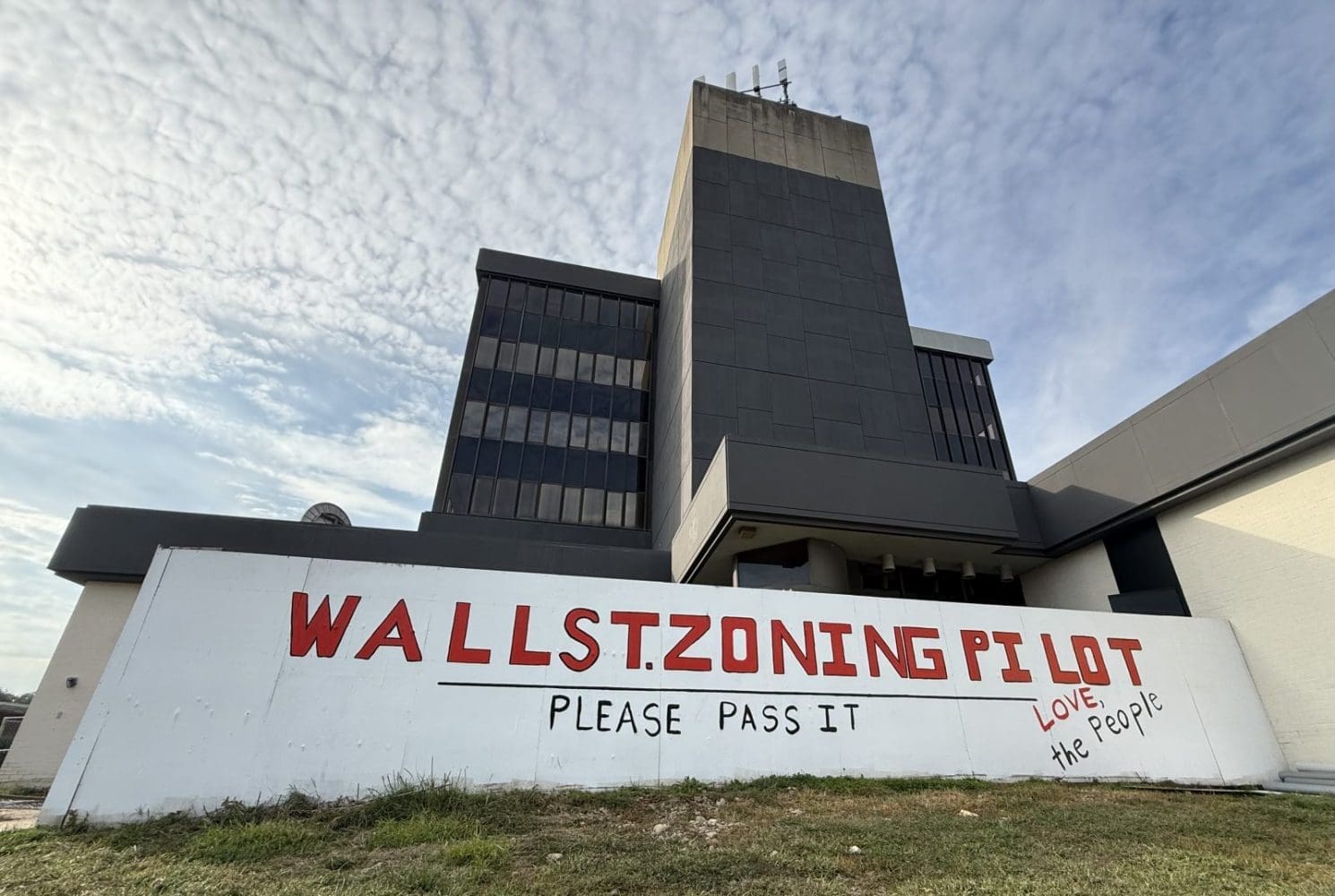
NORWALK, Conn. — The proponents of a pilot zoning overlay district for the Wall Street area told the Planning and Zoning Commission Wednesday that the proposal, which would limit parking and density regulations there, would help spur the kind of walkable, mixed-use developments the city wants.
And after nearly four hours of discussion and debate, many of the commissioners seemed inclined to agree with some version of the changes despite opposition from two city departments, including the Planning and Zoning office itself.
The proposal from the Wall Street Neighborhood Association would remove unit density caps, currently 1 per 500 square feet of building lot size, to give developers more flexibility, as well as relax off-street parking requirements, exempting residential developments of 60 units or fewer. Another change would adjust how affordable housing requirements apply to projects of 19 or fewer units, allowing developers to contribute to a housing fund rather than include deed-restricted units.
The proposal followed a petition launched by the group in March that attracted about 150 signatures, many from prominent business owners in the area.
A day prior to Wednesday’s public hearing, memos opposing the proposal authored by Jim Travers, the director of the Department of Transportation, Mobility, and Parking, and Steve Kleppin, the director of Planning and Zoning, were posted to the city’s website.
While they wrote that they were sympathetic to the issues raised by the proposal, and supportive of some of its goals, they feared the specific changes called for in the overlay district could be too significant at this time.
“While Staff is sympathetic and in agreement that the Wall Street area is unique within the city and requires special consideration from a zoning perspective, we feel strongly that now is not the appropriate time to enact any additional changes,” said Kleppin’s memo, which noted that the 155-unit Wall Street Place had just been completed. “In addition, Staff feels that there are better regulatory approaches the Commission can implement that achieve the goals of the applicant while being more consistent with our land use practices and that can be implemented incrementally to gauge impacts as they are adopted.”
Travers’ memo echoed the sentiment.
“TMP supports the Overlay’s broader goals of encouraging adaptive reuse, preserving Wall Street’s historic character, promoting walkability and transit-oriented development, supporting housing production, and facilitating investment in an area with unique physical and historic constraints,” it said. “TMP also recognizes that conventional parking requirements can present significant challenges for small or constrained properties, particularly historic buildings developed before modern zoning standards.”
However, Travers wrote, the proposed removal of any parking requirements for residential developments of 60 units or fewer units, which would remain in effect until a total of 300 units were approved, “could generate substantial cumulative demand” that could impact public parking in the area and be difficult to manage.
“Public parking facilities serve a much broader purpose than accommodating the residents or visitors associated with a single development,” Travers wrote. “They support existing businesses, restaurants, professional offices, cultural and educational institutions, municipal facilities, employees, customers, visitors, and others who depend on publicly available parking. This is particularly important in the Wall Street area, where many historic properties cannot accommodate substantial on-site parking and therefore already rely heavily on the public parking system.”
Discussion of parking dominated the discussion of the proposal during Wednesday’s hearing.
Travers pointed to a recent state law, House Bill 8002, which eliminated parking requirements for developments with 16 units or less, that he said “does a lot of what we’re looking for here, but on a smaller, more manageable scale,” urging the commission to wait and see how those changes impact the area.
Adam Blank, an attorney presenting the proposal on behalf of the neighborhood association, took issue with what he called the “analysis paralysis” approach, as well as some of the data from an occupancy study from the Parking Authority that concluded there was 67% overall average occupancy and 100% peak occupancy. He noted spaces leased by McMahon Ford at the Yankee Doodle Garage would be vacated with the business’ imminent closing, and that the occupancy study didn’t include public spaces at the library.
He pointed to an analysis from Principal Planner Bryan Baker which predicted 206 units of housing would be built instead of 51 over the next 10 years if the regulation passed, with 257 parking spaces used.
“The sky’s not falling here,” Blank said. “You guys are not going to take a nap for 20 years. You’re going to be able to look at this as often as you want, and certainly more than once every 10 years, to see where you are on capacity, to see what kind of development is coming online, what kind of parking is coming with it, and is the neighborhood transforming as you’d like to see?”
He said Kleppin’s recommendation to hold off on new regulations with Wall Street Place just coming online is “careful,” but “there’s always going to be things coming and going into the neighborhood.”
Jason Milligan, a major Wall Street area property owner and a frequent applicant before the commission, noted he has built about 100 units in recent years, but not many others have.
“I don’t think that developers are going to race in here,” he said. “There are other impediments. Not everybody wants to build this mix. It’s a little bit scary. It’s not for everybody.”
Other members of the neighborhood association said the overlay district made sense.
Greer Fredericks, who owns Greer Southern Table on River Street, said the business had 28,488 people visit the restaurant in 2023; 46,965 in 2024; 52,164 in 2025; and is on target for 62,000 this year.
“I rarely hear anybody complain about parking,” she said.
B.J. Lawless, owner of BanC House and BJ Ryan’s, echoed the sentiment.
“Parking is not a problem and what we need is more of the foot traffic and people that are living there,” he said.
Three members of the public spoke during the public comment portion of the hearing.
Norwalk Parking Authority Chairman Eric Rains noted data from the authority pointed to 60 percent of transactions coming from residents living outside the city, urging the commission to consider the need to manage short-term usage with long-term demand from residents living in the area.
Keith Mahler, the president of the organization that owns District Music Hall, said that parking is “critical” to the increasingly busy venue, which Blank and Milligan noted later does not provide any parking on its own.
“Our concern is making sure there’s plenty of adequate public parking available,” Mahler said.
Paul Fox said he moved to Norwalk because of the Wall Street area and supported the overlay, which he called “relatively low risk.”
“I came in with a car,” Fox said of when he originally moved to the area prior to getting “priced out” of the neighborhood. “It rarely left the garage. After about a year, I decided I didn’t need it anymore.”
Blank asked the commission to approve the overlay at its meeting Wednesday.
After roughly two hours of discussion and questions, commission member Tammy Langalis moved to approve the application.
Commission member Louis Schulman said that “disregarding the recommendations of our own staff” gave him concern and echoed Kleppin’s and Travers’ wait-and-see approach.
Another member, Douglas Hempstead, said he saw positives in the application but was hesitant to approve it exactly as proposed.
“I think this has a lot of merit, but I think there’s some tweaking that needs to be done to it,” he said.
To that end, Commissioner Harvey Jones suggested removing the 300-unit sunset provision. Commission Chair Chapin Bryce suggested lowering the 60-unit parking minimum exemption to 32 units. Commission member Diana Lenkowsky suggested deleting the provision concerning affordable housing restrictions which would allow developers of 19 units or fewer to contribute to a housing fund rather than include deed-restricted units. Commissioners also suggested other minor edits, like removing properties on Mott Avenue and West Avenue.
As the meeting neared the five-hour mark at 11 p.m., Bryce suggested having staff present a red-lined version of the suggested changes to commission members with “fresh eyes” at a future meeting date. Commission members then agreed to continue the application to their meeting Oct. 7.




Leave a Reply
You must Register or Login to post a comment.