


NORWALK, Conn. – An audience is all Norwalk Fire Chief Denis McCarthy needs to pass time in a pleasurable fashion, explaining in detail Norwalk’s new firehouse.
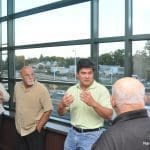
McCarthy was scheduled to give Common Council members a half hour tour of the new firehouse Thursday, but instead kept them for nearly an hour. Today, McCarthy gets another chance to lead visitors around the department’s new pride and joy, as a 1 p.m. dedication of the new facility on Connecticut Avenue is open to the public.
The new building might look different than the old Volk Fire Station, but it’s got things in common with it, McCarthy said.
“The building is on the same footprint as the old building,” he said. “The old building had a basement and no attic. This building has no basement and a third floor, and a peaked roof, which really when people go, ‘Oh my God, it’s so big,’ well, really, it’s another floor and the peaked roof that really makes it. And they cut all the trees down around it which really makes the building stand out.”
It’s got 7,000 square feet more than the Volk Fire Station, but much of it is used for new purposes, including the 1,000-square-foot Emergency Operations Center and the 1,000-square-foot Board of Education data center. The EOC was paid for with a federal grant, and its facilities, such as video conferencing, are available to other city departments as needed, he said.
McCarthy requested and got a “traditional New England firehouse” feel to the interior furnishings, inspired by a firehouse in Peabody, Mass., where he is from. That means dark wainscoting and warm tones on the walls. Bamboo flooring in the common area is environmentally friendly, he said, and rather than go with tiles in the firefighting spaces, the building features stained concrete.

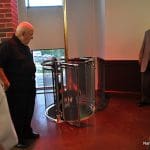
More colorful is the station bell forged in 1882, now hanging in the firehouse’s atrium. Visitors to the third floor might be impressed by the poles heading down from the firefighter’s living area to the second floor, a fast and safe exit when there is a call.
McCarthy said new standards limit a pole to 14 feet, so firefighters go down one pole and then another to get to their apparatus.
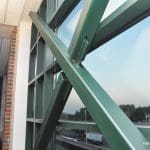
Criss-crossing beams on the outside walls might seem odd, but they’re needed for rigidity in the slim-yet-tall building, McCarthy said.
The emergency-oriented facets of the building go beyond officials coordinating disaster response with high-tech equipment during a snowstorm or hurricane.
“Right now, DPW folks go find a meal somewhere,” he said. “They’ll come here and they’ll eat. They’ll get back to work quicker, but, more importantly, they’ll understand what’s going on. Part of the disaster response is really understanding what’s going on in the rest of the response so having people in a central location where they can rub elbows, share information, understand the bigger picture, is part of what we hope this facility will offer.”








Leave a Reply
You must Register or Login to post a comment.