

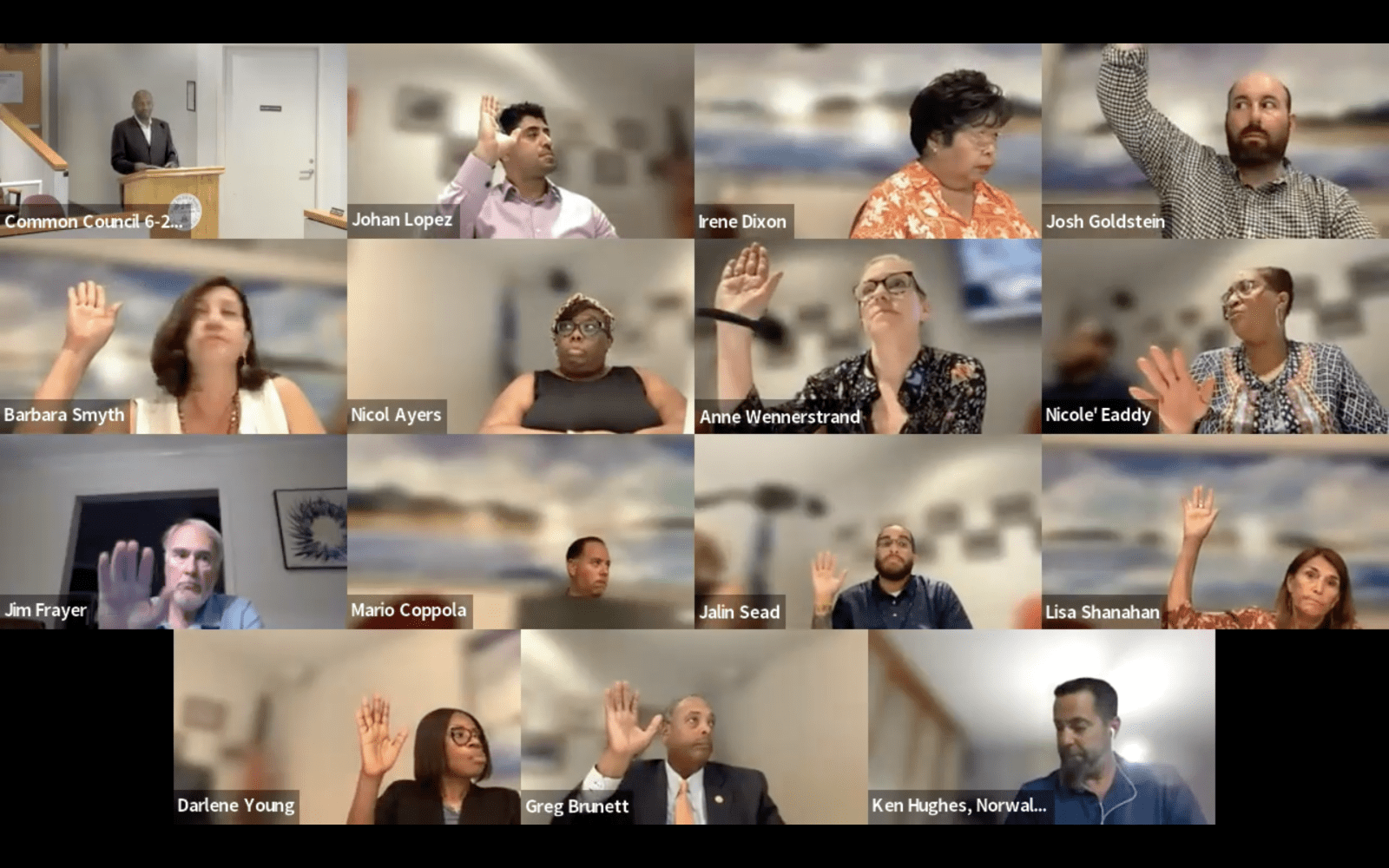
NORWALK, Conn. — In a well-attended and at times emotional meeting on Tuesday night, the Norwalk Common Council voted to move forward with a redesign of the Broad River Park baseball complex, which will feature clay infields and grass outfields. The council opted against the artificial turf that many in the youth baseball community had advocated for.
The council heard more than an hour of public commentary, then, as the meeting proceeded, an extended discussion of the field project and funding implications.
The decision allows the city to retain a $2.6 million state grant, secured by Senator Bob Duff, which is primarily intended for the construction of the field. Additionally, the procurement process to find a contractor can now begin in order to attempt to complete the project by next May, when baseball season starts.
“Without moving forward, we would lose this $2.6 million grant,” said Parks and Recreation Director Robert Stowers during the meeting.
While the cost of the field alone is estimated to be around $2.6 million, city officials stated that the total cost of the entire project is approximately $9 million. This will include maintenance and the hiring of personnel to care for the grounds.
The vote capped a debate with sharply divided opinions from residents, parents, environmental advocates, and even some of the players from Norwalk Youth Baseball.
Many of the speakers in support of the turf fields were affiliated with Norwalk Youth Baseball and raised concerns about the poor conditions of the current fields affecting player safety, limited playtime due to bad weather, and the potential economic benefits from hosting tournaments on turf fields.
“Kids take balls off of the chest, off of the face, so I’ve seen it happen several times this season,” said Tyler Fairbairn, a board member of Norwalk Youth Baseball. Fairbairn stated that Broad River Park is currently filled with weeds and rocks. “It’s better for them to have a flat, clean surface.”
Some residents from the Broad River Park neighborhood, while agreeing that the children deserved a better field, said that the potential health and environmental risks were too high a consequence.
“If there was one iota of risk, which there is, why would you risk public health, especially when it’s not necessary?” asked Kara Jennings, who lives directly across the street from the park.
One of the major concerns with artificial turf fields is the presence of synthetic chemicals called PFAS, also known as “forever chemicals,” in them. Several studies conducted by national experts from organizations such as Mount Sinai on the same topic were cited at the meeting.
According to a letter from Dr. Sarah Evans of the Icahn School of Medicine at Mount Sinai, read by Jess Parker of the Norwalk River Watershed Association, these fields have short lifespans of approximately 8 to 10 years, and runoff from the turf fields can enter the soil and waterways.
Runoff entering the waterways was a concern raised by several residents, as it can impact the quality of drinking water from wells and the nearby oyster beds. The site is in one of 80 aquifer protection zones in Connecticut, according to Louise Washer, president of the Norwalk River Watershed Association.
“Any look at the science available outside of the claims from manufacturers suggests a strong likelihood that the presence of these fields in [the] drinking water aquifer protection zone, which Broad River is, potentially puts our drinking water at risk,” Washer said. “And I don’t think Norwalk can afford that.”
Council member Jalin Sead raised concerns that the current natural fields have not been adequately maintained. This shortfall, he said, was because of a lack of city funding and not reflective of the Parks and Recreation Department.
“We as a legislative body need to really work on finding ways to really fund these fields, not just with this project, because there are many other fields that need to be maintained and upkept,” said Sead.
To address this gap, the Common Council considered ideas such as a community group with volunteers, sponsorships, and a Parks Foundation. The Parks Foundation idea has been in the works for some time, but a lack of interest from participants and the dedicated funding required to implement the nonprofit’s work have led to the plan being stalled, according to Stowers.
“We’re almost at 100,000 residents, and we don’t have facilities that reflect that,” said Council member Darlene Young. “And so we can banter back and forth, and what we don’t want is to find ourselves here in 2026 having the same conversation.”
While the Council ultimately approved the clay infields and grass outfields for Broad River Park, turf fields would still be an option for other locations going forward.
“This is not setting a precedent that we are abandoning turf fields in the city of Norwalk,” said Council member Greg Burnett. “Going forward…we build new facilities and new locations, I hope the turf field option is one that we strongly consider because of the usage and the maintenance and the savings, because I think that that would be of most value to the city.


Leave a Reply
You must Register or Login to post a comment.