

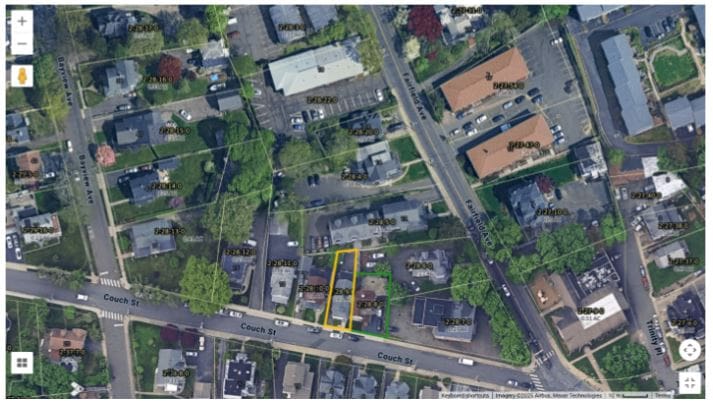
NORWALK, Conn. — In its November 19 meeting, Norwalk’s Planning and Zoning Commission denied a South Norwalk property owner’s attempt to legalize an unpermitted third apartment. The property owner purchased the home at 7 & 9 Couch Street in 2024, believing it was a legal three-family unit, and rented out the unpermitted third unit. A fire marshal inspection triggered a zoning investigation, and the city issued a notice of violation and citation to the homeowner shortly thereafter.
While the property owner sought to rezone 7 & 9 Couch Street from two-family to multi-family to fix the violation, citing proximity to existing multi-family zones and a lack of affordable housing in Norwalk, residents of Golden Hill protested. Neighborhood representatives argued that the retroactive approval could be a “slippery slope” and would “greenlight” other property owners to make the same request. Other Golden Hill residents cited street parking issues, and advocated against the commission making an approval that would add more congestion to the area.
The commission largely concurred. “I’ve objected to resolving these kinds of issues through zoning changes,” Commissioner Louis Schulman said. “The proper process is for the violator…to correct the violation.”
The commission agreed that fixing a violation through a zoning change would set a bad precedent. “I feel badly for [the owner],” Commissioner Galen Wells said. “But regardless of that, I think trying to remedy this with a zoning amendment is a bad idea.” The commission voted unanimously to deny the rezoning request, forcing the owner to remove the illegal unit to bring the home into compliance.
A similar fate met another application seeking retroactive approval later in the meeting – an unpermitted erosion control structure at a coastal home on East Avenue. While the house had received approval for stormwater management in 2024, contractors filled in a two-foot depression with soil during construction, deviating from the approved plans. An engineer representing the site argued that the site’s slopes are “extremely steep” and that riprap slope stabilization was “necessary and unavoidable.’
The commission, however, voiced frustration that significant construction occurred outside of approved plans. “If it’s too hard to do construction on a slope,” Commissioner Ana Tabachneck said, “then you shouldn’t do construction on a slope. Planning staff also took umbrage with the fact that debris and sediment had washed into the adjacent waterbody, and that required plantings were never installed.
After some debate over enforcement and the risks of retroactively approving unpermitted construction, the commission voted to deny the coastal application without prejudice, leaving the door open for the owner to return with a revised plan. The two denials this week – the illegal third-unit apartment and the unpermitted coastal structure – underscore P&Z’s emphasis on strict enforcement. As one commissioner noted toward the end of the meeting, “Compliance comes first.”



Leave a Reply
You must Register or Login to post a comment.