Quantcast
, ,

Norwalk added thousands of apartments. Rents rose anyway.

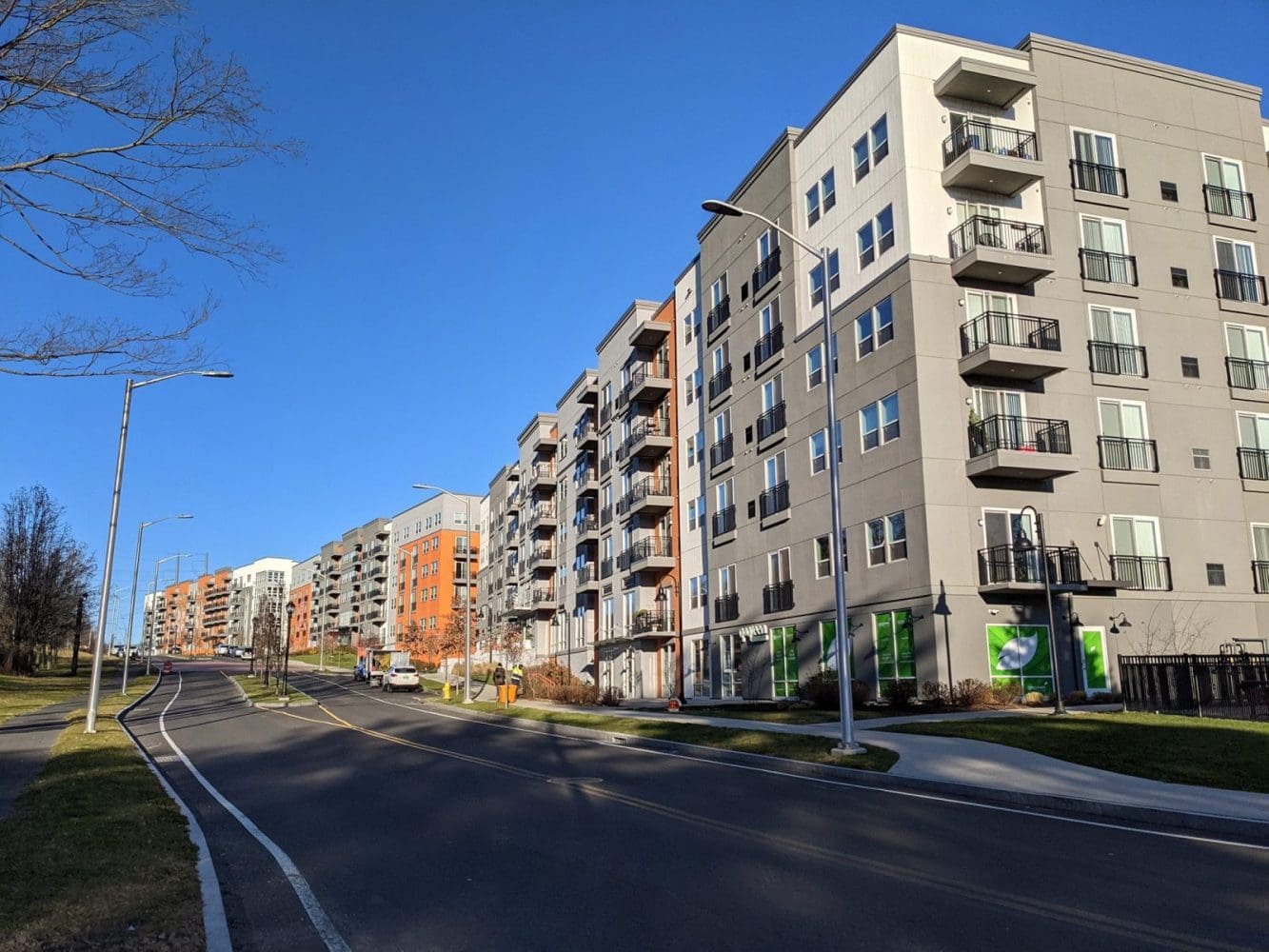
NORWALK, Conn. — In the past decade, Norwalk has seen a wave of large residential development, particularly in South Norwalk and along the West Avenue corridor. The new buildings have reshaped those neighborhoods and expanded the city’s tax base.

A NancyOnNorwalk analysis published earlier this year found that four large apartment complexes on a half-mile stretch of West Avenue alone account for roughly $300 million in taxable property value, but the development boom has not made renting in Norwalk any cheaper.

According to data from Zillow Research, the median asking rent in Norwalk climbed from $1,589 a month in January 2015 to $2,679 a month in April 2026, an increase of nearly 69 percent over 11 years.

Norwalk rents rose 69% in 11 years.
The median asking rent in Norwalk climbed from $1,589 in January 2015 to $2,679 in April 2026 — an increase of more than $1,090 per month. New apartment construction did not slow the rise.
Jan 2015
$1,589
starting rent
Apr 2026
$2,679
current rent
Total increase
+69%
over 11 years
Per month more
+$1,090
added cost
Median asking rent — Norwalk, CT Pandemic surge (2020–2022)
Norwalk median asking rent rose from $1,589 in January 2015 to $2,679 in April 2026.
Source: Zillow Research, Observed Rent Index, 2015–2026. Monthly median asking rent, Norwalk, CT.
NANCYONNORWALK

Connecticut home prices rose more than 80 percent over the same period, according to the Federal Housing Finance Agency.

The city's 2025 Affordable Housing Action Plan found that nearly half of Norwalk's approximately 17,000 renters were cost-burdened in 2022, meaning they spent more than 30 percent of their income on housing.

Norwalk Housing Units vs. Affordable Share — NancyOnNorwalk
Chart 1 of 2
Norwalk added thousands of homes, but the affordable share barely moved
Total housing units grew by more than 2,300 over a decade. The share qualifying as affordable under state law rose less than 2 percentage points.
Total units, 2015
35,800
ACS 5-year estimate
Total units, 2024
38,129
+2,329 units over 9 years
Affordable share, 2015
12.32%
DOH Appeals List
Affordable share, 2025
14.13%
+1.81 pp over 10 years
Total housing units (right axis)
% affordable housing (left axis)
Total units up 2,329 over 9 years; affordable share up only 1.81 percentage points over 10 years.
Norwalk Affordable Share vs. CT Home Prices — NancyOnNorwalk
Chart 2 of 2
Home prices nearly doubled while affordable housing crept upward
Connecticut's home price index rose more than 80% between 2015 and 2025. Norwalk's affordable housing share gained less than 2 percentage points in the same window.
CT home price index, 2015
385.7
Annual avg., FHFA via FRED
CT home price index, 2025
697.2
+80.8% over 10 years
Affordable share, 2015
12.32%
DOH Appeals List
Affordable share, 2025
14.13%
+1.81 pp over 10 years
CT home price index (right axis)
% affordable housing (left axis)
9% 11% 13% 15% 17% 300 400 500 600 700 2015 2016 2017 2018 2019 2020 2021 2022 2023 2024 2025 2015: index 385.7 2016: index 387.7 2017: index 389.8 2018: index 394.0 2019: index 404.8 2020: index 422.9 2021: index 481.4 2022: index 548.9 2023: index 597.3 2024: index 650.8 2025: index 697.2 2015: 12.32% affordable 2016: 12.71% affordable 2017: 12.72% affordable 2018: 12.75% affordable 2019: 13.15% affordable 2020: 13.50% affordable 2021: 13.67% affordable 2022: 14.36% affordable 2023: 13.34% affordable (dip) 2024: 14.03% affordable 2025: 14.13% affordable

The median income for Norwalk renters was $71,000, lower than what most rental units currently on the market require, the plan noted.

Norwalk has a long-standing law meant to prevent new development from worsening that problem. Article 101 of its zoning code requires developers of 20 or more units to set aside at least 10 percent of those units as affordable to households earning up to 80 percent of the state median income.

Norwalk has a long-standing law meant to prevent new development from worsening that problem. It's now found in Article 6, Section 6.12 of the city's zoning code. That same requirement used to live in a different part of the code, called Article 101, before the city rewrote its zoning regulations in February 2024.

The rules work differently depending on the size of the project.

For developments of 10 or more units, at least 10 percent of the units must be set aside as workforce housing. Developers choose between two paths: serve renters earning up to 60 percent of the state median income with no extra fee, or serve renters earning up to 80 percent of the state median income and pay the city a fee worth 1 percent of the project's construction cost.

For smaller developments, 3 to 9 units, the rule is different. A developer can build 1 workforce housing unit, or skip it entirely and pay the same 1 percent fee. This is a true buyout, but it applies only to small projects.

The old version of the code, Article 101, also allowed a developer to apply for a special exception and pay a much larger cash fee instead of building any affordable units on site. That option no longer exists in the current zoning code, and Planning and Zoning officials say, to their knowledge, no developer has ever used it.

In the Central Business District and SoNo Station Design District, that requirement kicks in at just 12 units.

Developers have options for how they comply. They can build the affordable units on site, or they can apply for a special exception and pay a cash fee into a city affordable housing fund instead, without building a single affordable unit on the development itself.

Some developers in the Central Business District or SoNo Station Design District choose an option that allows them to serve renters earning up to 80 percent of the state median income, rather than 60 percent. Those developers still have to build the affordable units, but they also pay the city a fee worth 1 percent of the project's construction cost, which goes into a fund for future affordable housing.

Records obtained by NancyOnNorwalk through a Freedom of Information request show the city has collected $2,290,905 in inclusionary zoning fees, equal to 1 percent of construction costs, from at least 45 developments.

The Planning and Zoning Department also said there have been no transactions out of the city's affordability fund. The city's Finance Department, in response to an earlier records request, said it had no record of the fund.

The largest single payment came from a 393-unit development at 467 West Avenue, which paid $1,002,023, nearly half of everything ever collected. A 204-unit development at 370 West Avenue paid $310,745. A 200-unit project at 15 Chestnut Street paid $215,000.

The city's Finance Department, in response to an earlier records request, said it had no record of the fund.

The largest single payment came from a 393-unit development at 467 West Avenue, which paid $1,002,023, nearly half of everything ever collected. A 204-unit development at 370 West Avenue paid $310,745. A 200-unit project at 15 Chestnut Street paid $215,000.


A NancyOnNorwalk analysis of Connecticut Department of Housing records found that of the 1,029 total new assisted housing units Norwalk gained between 2015 and 2025, more than half, 560, came from the federal Section 8 voucher program, a federally funded program administered outside the city's direct control.

Government-assisted units, which account for 27%, are housing units in properties that receive direct public subsidy, including public housing authority apartments.

Deed-restricted units are privately owned apartments or homes where affordability is locked into the property's ownership documents through a recorded legal covenant that binds every future owner, regardless of who lives there.

State records show Norwalk added 98 net new deed-restricted units over the decade.

Where Norwalk's New Affordable Units Came From — NancyOnNorwalk
Where Norwalk's 1,029 new assisted units came from.
More than half of Norwalk's affordable housing growth over the past decade came from the federal Section 8 voucher program.
Tenant rental assistance
560
54.4% of total 8
Gov. assisted units
278
27.0% of total
Deed-restricted units
98
9.5% of total
CHFA mortgages
93
9.0% of total
Tenant rental assistance (Section 8) — 560
Gov. assisted units — 278
Deed-restricted units — 98
CHFA mortgages — 93
Of 1,029 new assisted units in Norwalk 2015–2025: 560 from Section 8 vouchers, 278 government assisted, 98 deed-restricted, 93 CHFA mortgages.
→ Deed-restricted units are the only category where affordability is legally guaranteed to stay in place. Unlike vouchers, which follow a tenant and can disappear when federal funding shifts, deed restrictions are written into the property's ownership documents and bind every future owner.

The city's Affordable Housing Action Plan, released in February 2025, estimates that nearly 8,000 affordable rental units are needed to meet demand. The plan proposes zoning reforms, expanded rules for accessory dwelling units, density bonuses, and public-private partnerships to close that gap.

More than $2.29 million in fees collected from developers remains unspent in a city fund legally designated for affordable housing.

This is the first in a NancyOnNorwalk series on Norwalk's housing market. Part 2 will examine who owns the city's largest apartment complexes.

Editor's note: An earlier version of this story incorrectly described the city's 1 percent inclusionary zoning fee as the former fee-in-lieu option. The story has been corrected to reflect zoning regulations that took effect Feb. 19, 2024. According to the Planning and Zoning Department, the fee-in-lieu option was eliminated and never used. As of publication, the city's eCode360 website still contains the outdated zoning language.

Comments

25 responses to “Norwalk added thousands of apartments. Rents rose anyway.”

  1. Ray Juodaitis

    [ QUOTE] Records obtained by NancyOnNorwalk through a Freedom of Information request show the city has collected $2,290,905 in such fees from at least 45 developments. According to the Planning and Zoning Department, no dollars have been spent. The city’s Finance Department, in response to an earlier records request, said it had NO RECORD of the fund. . [/END QUOTE ]

    Thank you Ashley for that.

    1. Marissa santangelo

      100% agree,,,we need outside auditors to do a proper audit and who knows what will be found ….

  2. John O’Neill

    Maybe we should start with Property Taxes increasing 40% over the past 3 years as a base reason for higher rents.
    Do renters not think tax increases effect them??

  3. Susan Schwartz

    Interesting. What I take away is that rents in Norwalk increased 11% less than the state average. We have a housing shortage in the country, the state and the city – rents would have soared even higher if no additional density had been added. Also – I may be wrong, but I believe there is a ad hoc committee of the council that has been addressing the issue of the affordable housing fund. I think the antiquated ordinance made it hard to figure out how to spend it. I remember seeing a Facebook post earlier this year looking for members of the public to join it to help figure out how the funds can be used.

    1. Marissa santangelo

      not my take away..not even close..we NEED a transparent third part AUDIT of City finances and would be dreamy to have professionals do a proper BUDGET..focused on efficiency for a CHANGE

    2. Matthew Silber

      I agree Susan, to not compare Norwalk rent increases to the same statewide right from the jump is burying the lede, in my opinion.

      If our rents went up 69% in 20 years, and the statewide average was 80%, what would our increase have looked like if we built nothing?

    3. Ana Tabachneck

      Yep, just imagine what the rents would be if nothing had been built. And relatively few of the properties have used the fee in lieu option, which is why our deed restricted percentage had stayed steady (slightly gone up) even though so many new units were added. There are a number of good examples of other cities using their affordable housing funds to build deeply affordable housing, partnering with local non-profits and known low income housing developers. I hope we can put the money to good use!

  4. Thomas Blyth

    American Community Survey 5-year estimates show that the total number of housing units increased from 37,141 in 2014 to 38,129 in 2024, up by 988 homes or 2.7%. In the same time, our population increased from 87,214 to 92,187, an increase of 4,973 people, or 5.7%. In other words, population grew over twice as fast as housing supply in percentage terms, or over five times as fast in absolute terms.

    With numbers like that, how should we expect prices to do anything but rise? We’re not even close to keeping up.

    1. Becca Stoll

      exactly. we’d be even worse off if we’d done nothing.

      We have a stab wound and people are upset that a band-aid didn’t fully fix it.

    2. Thomas Blyth

      Sorry I keep replying to myself, but I picked 2014 on a whim not realizing Ashley picked 2015. That lead me down a rabbit hole that showed we lost 3,789 units from 2012 to 2016, falling from 38,957 to 35,168. Anyone know why that happened???

  5. Patrick Cooper

    This is excellent reporting.

    Surprised? Been watching this space for many years, can’t recall anyone doing a better job of exposing the ruse that more of these buildings will lead to lower rents.

    I am waiting for the day that Spinnaker and/ or any other developer says their business plan is to saturate the market with so many units – to the point their return per unit – drops.

    As for “part-2” – please be sure to follow the ownership trail. Who owed it first – then sold to whom – and so forth. The game plan for many is – use “influence” to get sweet deals (just a little text amendment to the deed restrictions, zoning, or allowable build), hire one of the local insider attorneys (Suchy, Blank) to roll it through P&Z, build it fast & cheep – fancy façade but cardboard for walls, and then – when it is opened, and the tax incentives are on full blast – and the new plantings are blooming – sell it to a REIT. Generational wealth in less than 5 years.

  6. Tysen Canevari

    spin it however you want but all these apartments bring nothing to the city. Tax abatements galore. They developers make so much money that they just pay the fee. I am curious as to where are all the special interest groups when they cut trees to build apartments? Police station cuts down three and we need a public hearing. However, Harry was quoted as saying, “One party rule is good!”

    1. Becca Stoll

      They bring people who pay taxes via their rent, their jobs, their local purchases. They could represent new clients for Mr. Canevari’s local small business. They CAN bring traffic down by giving people more options to live closer to where they work (or to their transit commute) if we actually follow through on the infrastructure improvements. I for one would love to have more neighbors my own age.

  7. Joe G

    Not only has increased development not slowed the rate of price increases,’it also hasn’t stemmed the rise in property taxes despite the expanded tax base. Same story is true in Stamford which has increased the number of units more than 30% in the past 10 years. I wonder how much affordable housing downtown is currently occupied by illegal immigrants? We will never know because those who support it want to pretend it has no impact on housing, when we all know that cannot be true.

    1. Becca Stoll

      That’s because our current zoning rules are downright hostile to new commercial interests. Residents are holding the bag because we aren’t allowing businesses to open and participate in our economy more equitably.

    2. Becca Stoll

      Also last time I checked all tenants pay property taxes by paying rent, regardless of country of orogin.

  8. David Muccigrosso

    We’re probably still about 10k units short. That’s why they haven’t gone down yet. Austin beat the cost curve ONLY by building enough to break the market back into a normal boom-and-bust business cycle.

    Also, we should ban any construction that is financed with minimum rent requirements in the loan covenant. This is how Wall Street forces these places to keep their rents artificially high.

  9. Thomas Belmont

    It’s phenomenal that all of this apartment housing building has resulted in residential property taxes substantially increasing each year, disregarding the revaluation project. Suspect is the notion of sanctuary city give aways, excess public education budgets, and chimerical project spending. No sign of mil rate reduction has been entertained. No concern for the property taxpayer. And no apprehension of losing political power at election time.

    1. David Muccigrosso

      The average cul-de-sac does not pay for its own sewers and streets by a factor of 2-5x. The densest areas in ANY city are the ones actually paying for everything.

      THAT’S why your property taxes keep going up. THAT, and the fact that you keep voting to restrict supply such that the valuations keep going up.

      Proof: https://www.urbanthree.com/services/revenue-modeling/

    2. Raymond Schier

      Indeed. And there seems to be no end, and no way to satiate the insatiable BOE. Cannot help but think that these increases are driven in part by English Second Language programs – the result from burdensome sancuary policies. Sewer installations are actually assessed, and incurred on the part of taxpayers, as well as ongoing usage fees. They are doing their best to force seniors out of their homes.

      1. Becca Stoll

        Cite your source on that claim about MLL please.

        It’s true that special education costs are up, but that’s because we are finally doing a better job identifying students in need of help and now a broken system is backlogged. That is not a reason to resort to racist assumptions and a blame game.

  10. Bryan Meek

    Lost in all of this is the destruction of the quality of life while we witness our city slowly choking to death

    Maybe bonecrushing traffic and perennial 10% tax increases won’t do it before running out of water does.

    Single party rule has brought us the idiotic planning that serves to feed the greed and ambitions of a few.

    1. Becca Stoll

      What quality of life?

      I have been here 5 years and seen new restaurants open, more millennials move to town, more of Norwalk become accessible by foot, bike, bus, and train.

      I thought that’s what it looked like here in the “good old days” when many current seniors’ parents moved here to put down roots and start families, businesses, legacies, etc.

      All I want is to go to my jobs, live in my house, be friends with my neighbors, and someday teach my kids to bike on a quiet street like your parents were able to do for you without fear they’ll be plowed to a pulp.

Leave a Reply

Secret Link