

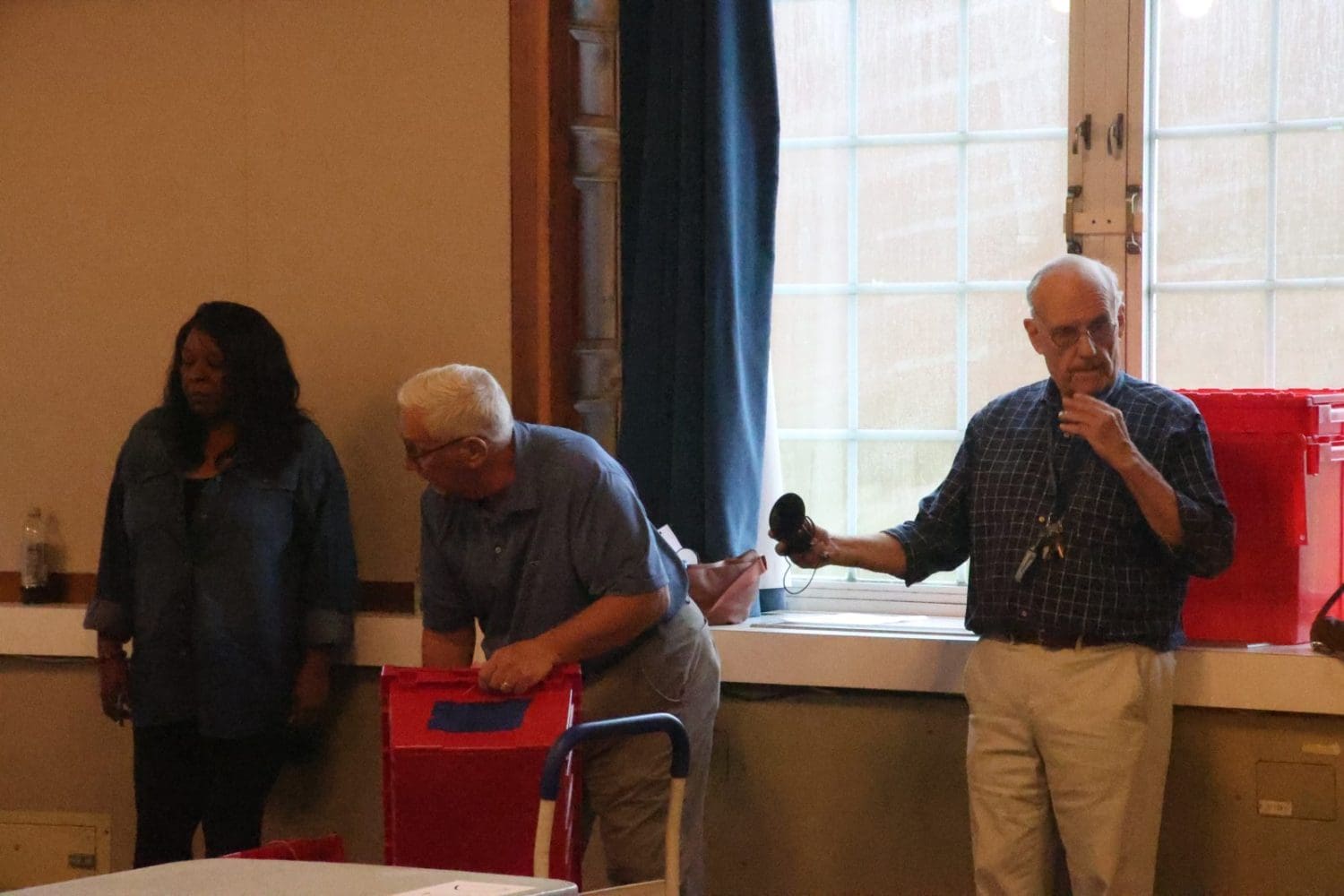
NORWALK, Conn. Norwalk Democratic Registrar of Voters Stuart W. Wells III led a post-primary audit this week, reaffirming the accuracy of tabulator machines used during the Sept. 9 Democratic mayoral primary.
The audit, required by state law, involved randomly selected precincts and checked ballots cast on Election Day, as well as absentee and early voting ballots.
“This may be the first time early voting ballots have been audited,” Wells said during the process. He noted that the procedure is distinct from a recount, explaining, “In an audit, we check the ballots the tabulator counted, and we check whether the tabulators were working correctly.”
Workers sworn in for the audit used the “pile method,” sorting ballots into separate stacks for each candidate and for blank or questionable votes. “Making piles allows us to have a pile for each candidate and any that are either undetermined or don’t contain any votes. They can then be double-checked, because it’s a pile somebody else can count,” Wells said.
Counters worked in pairs using a blind system, meaning neither knew the expected totals nor each other’s counts, to reduce the chance of bias or error. Before counting began, seals on ballot containers were verified against election night records.
Questionable ballots were displayed under a camera so observers could view them, and the entire audit was recorded for transparency.
There were a few minor discrepancies, such as piles being one off, but these were quickly resolved by recounting and double-checking.
The audit confirmed that Norwalk’s voting machines functioned as intended and that the city’s election process complied with state requirements.


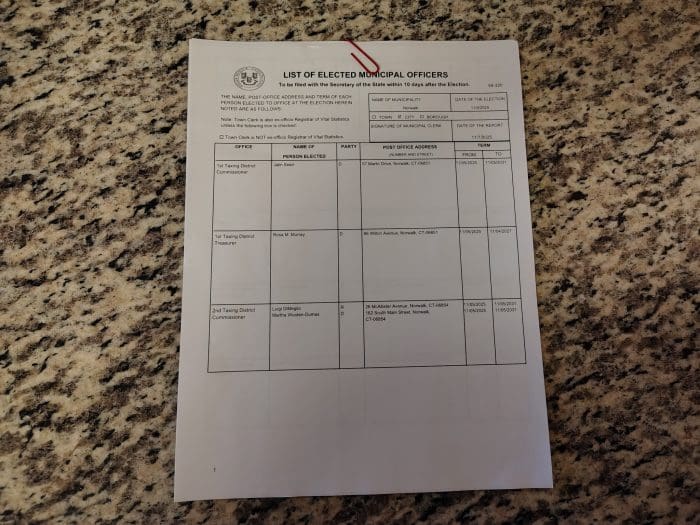


Leave a Reply
You must Register or Login to post a comment.