

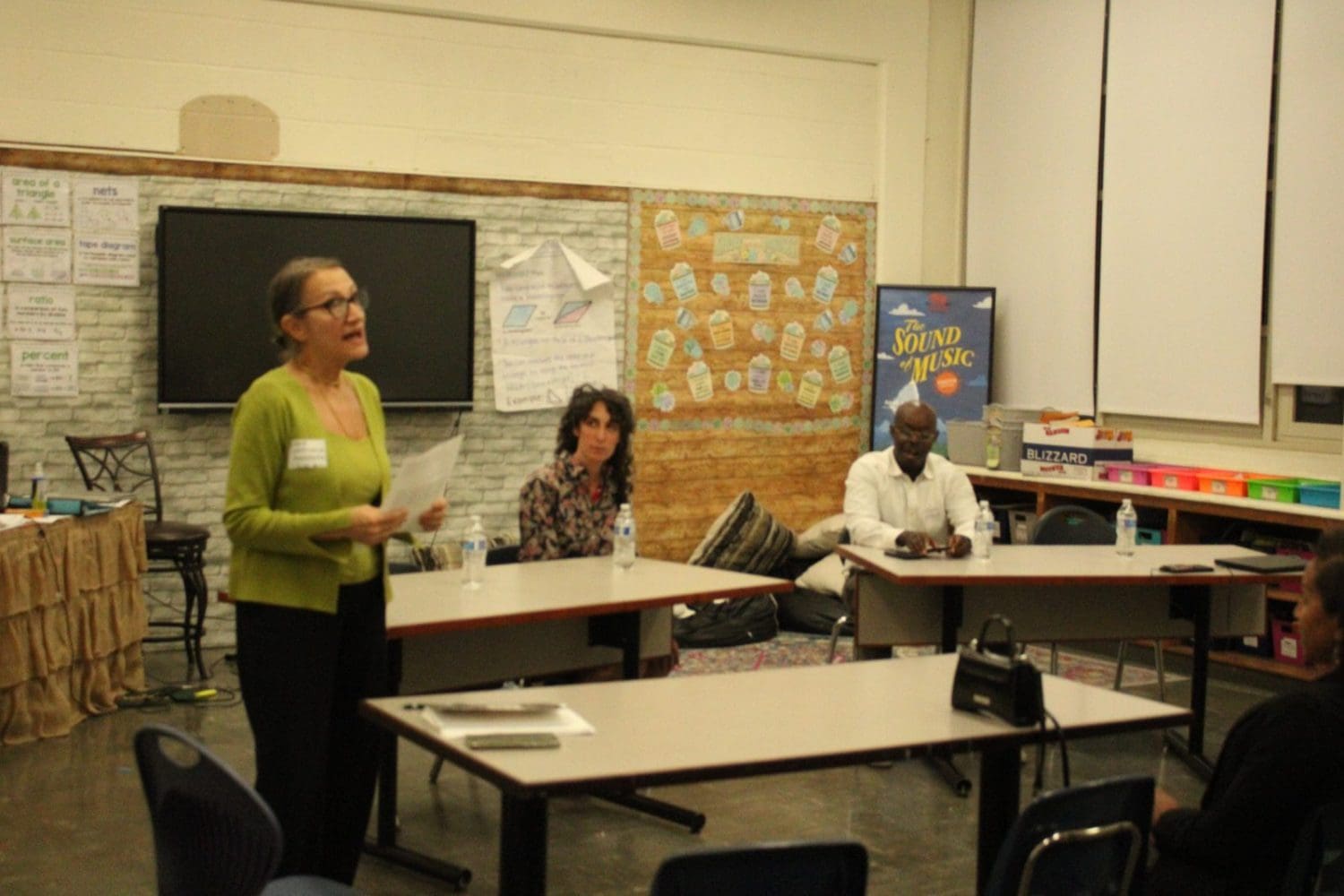
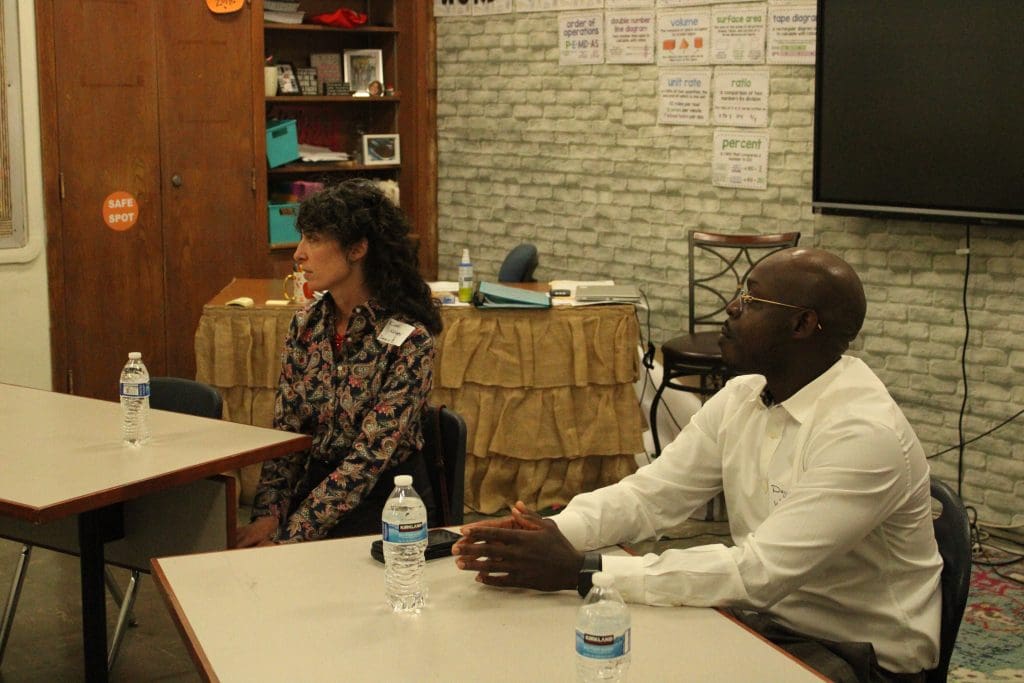
NORWALK, Conn. — Candidates for the Common Council’s District B seat discussed affordable housing, infrastructure, and community engagement on Oct. 6, during a League of Women Voters forum at Nathan Hale Middle School, co-sponsored by Norwalk Acts and NancyOnNorwalk.
Democrats Darlene Young and DaJuan Wiggins joined Republican Kimberly Krieger for the discussion. Republican Harold Bonnet was not in attendance.
Experience and priorities
Wiggins, the Democratic and Independent cross-endorsed incumbent, said his first term gave him perspective on how much collaboration the role requires. “It takes a lot of work. It takes a lot of organizing and getting to know people and how to work the committees,” he said. “You learn how to navigate through those phases, how to do politics, because that’s how you get things done.”
Young, a Democrat and longtime South Norwalk resident, said her work as a community activist led her to public office. “I’ve been in South Norwalk since 1991, when it wasn’t so safe, and I’ve seen the changes,” she said. “There’s a lot more that needs to be done, and I think at this stage in my life and experience, I can impact the community in a meaningful way.”
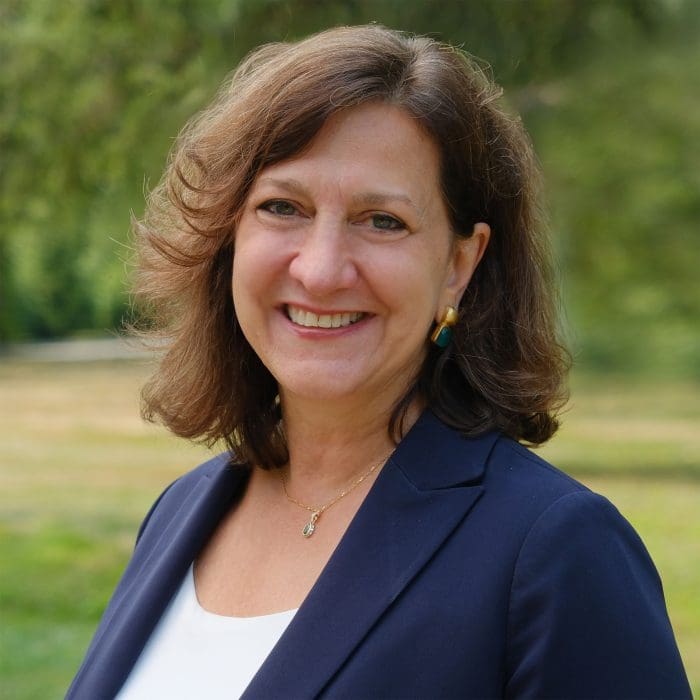
Krieger, a Republican and public relations professional who grew up in South Norwalk, said she wants to address everyday issues affecting residents. “We have all these commercial trucks that park on our residential roads, even all night illegally, and block emergency vehicles,” she said. “If you elect me, I promise to focus on those challenges.”
Affordable housing and development
Candidates were asked to share their approaches to Norwalk’s housing shortage.
Wiggins said he supports expanding affordable options to allow residents to stay in the city. “I’m really an advocate for affordable housing,” he said. “People from Norwalk should be able to stay in Norwalk and not get pushed out.”
Young said the city should focus on a range of housing types. “We need to look at senior housing, townhomes, and first-time homebuyer opportunities,” she said. “We don’t have a lot of land, so we have to be creative with some of these empty buildings.”
Krieger noted that while Norwalk exceeds the state’s 10% threshold for affordable housing, challenges remain. “By Connecticut standards, Norwalk does pretty well,” she said. “But we need more affordable housing for seniors—people who no longer need a four-bedroom home but want to stay in the community.”
Infrastructure and capacity
Audience members expressed concern about whether infrastructure could keep pace with new development.
Krieger said South Norwalk Electric and Water (SNEW) has projected a capacity strain by 2030 if all proposed apartment complexes are built. “We need to collaborate with SNEW and our colleagues who sit on that board,” she said. “We also need to think about sewage, which already overflows in storms.”
Wiggins said he wasn’t an expert on the issue but called it “alarming” and something he wants to learn more about.
Young said the city must assess infrastructure needs before approving additional projects. “There’s just no way you can continue without stopping and taking a breath to assess our infrastructure,” she said. “Nobody wants to see brown water anytime.”
Budget and oversight
When asked about a proposed charter revision that would allow a Common Council member to serve as an observer on the Board of Estimate and Taxation, both Young and Wiggins said they support it.
“That was my idea,” Young said. “It’s a way to build a better working relationship between the board and the council.”
Wiggins added, “We really don’t have much of a say when it comes to the budget. It’s important for us to be in those spaces and have that line of communication.”
Krieger said that while her party’s local committee structure already provides regular updates across subcommittees, she didn’t oppose the concept of improved coordination.
Community engagement and communication
All three agreed that public outreach could be improved.
Wiggins said the council’s newsletter was a good start, but suggested investing in marketing. “We need to run this city like it’s a business,” he said.
Krieger said she would use both digital and traditional outreach methods. “I’d probably have an Instagram account for District B and also put posters up around South Norwalk,” she said. “Different people get their information in different ways.”
Young said she helped launch the council newsletter while serving as council president, but believes Norwalk needs a stronger communications department. “Our website is bland and out of date,” she said. “The council does a lot of work, and it’s about getting that out to the public.”
Walkability and transportation
In closing, candidates discussed making District B safer for pedestrians and cyclists.
Young said the city should consider truck parking restrictions and design new sidewalks with multiple modes of transportation in mind.
Wiggins said his priority is safety. “Two of my students got hit by scooters,” he said. “Bike lanes are good, but they disappear—so we need more consistency.”
Krieger said she supports expanding traffic-calming projects. “When streets feel narrower, motorists slow down,” she said. “When they slow down, accidents are much less likely to be fatal—or happen at all.”



Leave a Reply
You must Register or Login to post a comment.