

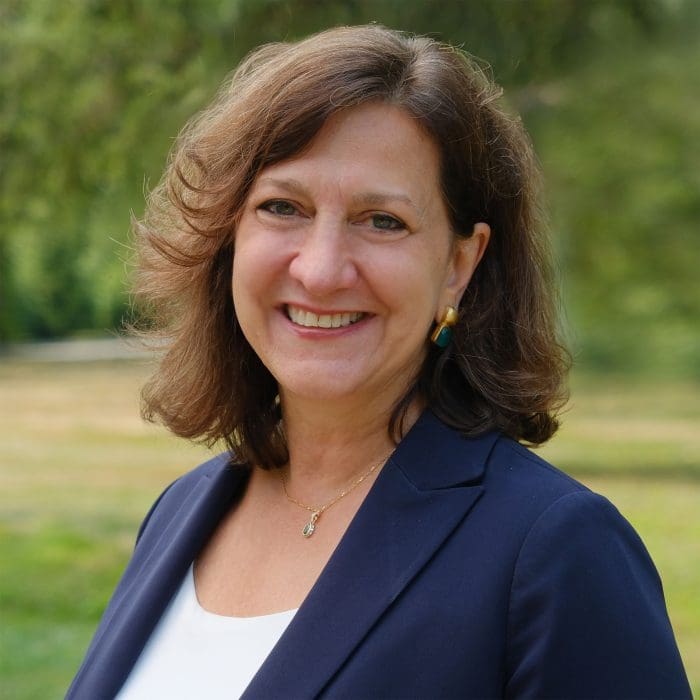
Lisa Brinton
Candidate for Common Council At-Large
Party Affiliation: Independent Party
Why are you running for Common Council At-Large, and what do you hope to accomplish if elected?
I’m running for Council At-Large because Norwalk needs ideas, not ideology to remain affordable. My two priorities: 1) address operational and quality of life issues brought about by density by focusing on running the city better for residents versus kowtowing to Hartford’s agenda, and 2) diversify our tax revenue from over reliance on residential homeowners because it’s not sustainable and double-digit property taxes and school budget deficits are the foreseeable future without change.
What does it mean to represent the entire city “at-large” as opposed to a specific district? How will you ensure all neighborhoods are heard?
What are the top three issues you believe Norwalk needs to address in the next two years, and how would you approach them?
- Running the city means addressing issues exacerbated by density, not ignoring them. This includes blight, on street parking, zoning violations and road congestion. Adding apartments and people have added strain on our infrastructure, schools, police and fire. Employees are overwhelmed. Overlapping department functions impact morale and taxpayers’ wallets. Some departments need more staff. Others less. For example: Transportation, Mobility & Parking, Public Works and the Parking Authority have overlapping ‘road’ functions and appear to have conflicting priorities. Three departments/agencies are in the housing development business: P&Z, the Redevelopment Agency and Norwalk Housing Authority. The City & BOE don’t need separate purchasing, HR, finance, communications and IT departments
- Diversifying tax revenue means conversations about 1) stopping the developer tax abatements, 2) imposing vacancy taxes for blighted properties 3) actually enforcing blight fines, 4) implementing parking permits, 5) fighting for fairer state ECS funds and 6) pushing state reps and Hartford for a portion of local sales taxes to ease the tax burden on the shrinking number of homeowners. We can’t keep giving property tax abatements (our primary source of income) to developers, while bearing a disproportional amount of Fairfield County poverty.
How would you balance the need for economic development with concerns about overdevelopment and infrastructure strain?
Economic Development is not just building apartments, unless you’re a developer or hedge fund. Economic development is job creation and new business, but Hartford more than a municipality owns that. City Hall should streamline the permitting process for new businesses, but Hartford sets the business climate. Connecticut ranks 47th by the Tax Foundation for business taxes in 2024/23 and second worse for start-up companies in 2025 by Wallet Hub. Low energy sources, aging infrastructure and transmission costs make electricity rates among the highest in the nation and difficult place to do business. Norwalk’s Merritt 7 is a poster child for companies that have left.
What’s your stance on affordable housing in Norwalk? What policies or zoning reforms do you support or oppose?
Affordable housing is a misnomer. There is the obvious human right of shelter, but city officials gloss over actual rents or the special interest ecosystem of bankers and hedge funds that finance housing and tax abatements. What is affordable? The politics of housing is geared for bigger. Norwalk needs smaller, more inclusive housing, not huge fortresses and housing that doesn’t add further strain on the schools. State exclusionary zoning means Fairfield County concentrates poverty in cities like Norwalk, Stamford and Bridgeport. Hartford’s density without dollars ‘agenda’ sums up our problem. Hartford wants more people for income and sales tax dollars but won’t help with city expenses – especially the schools. That’s our problem. Current officials are too ideological or don’t get the math, continuing to pass financially reckless policies that line pockets of special interests, but reduce our ability to fund police, fire, schools, parks and roads. We have 14% deed restricted affordable housing. I support senior housing because It won’t burden the schools, but despite all the development, rents haven’t come down and forfeiting property taxes for developers is straining our revenue stream, placing more burden on homeowners.
Do you support expanding public transit, pedestrian infrastructure, and bike lanes in Norwalk? Why or why not?
I support public transit. Bus routes and schedules are more efficient and responsive. Investment in sidewalks is good. The city should continue in the core of the city, with the most foot traffic. Regarding bike lanes, living in South Norwalk, I ride my e-bike with regularity. I support the Norwalk River Valley Trail, however simply painting bike lanes on narrow 350-year-old roads does not constitute road safety, given traffic.
How do you view the role of the Council in the city’s annual budget process? Would you support reforms to increase fiscal transparency or community involvement?
The budget process between the mayor, council and BET is Norwalk’s one governing process with check and balance. Unfortunately, the council doesn’t get to participate earlier in the process. The budget is prepared by the mayor’s office, despite the council sitting on department committees. The largest item – the school budget, the council has no line-item authority. That rests with the BOE, with examination by the BET.
Do you support the recent Charter Revision proposals? Are there any structural reforms to local government you’d like to see pursued in the future?
Since 2016 and three charter revisions, Norwalkers have asked for fairer representation for the 45% with no say – save 3-minute public comments at the podium. We’re one a handful of towns with NO minority party representation for our legislative branch, unlike Connecticut’s other 166 towns! The committee started with high hopes – benchmarking other towns last summer. Things unraveled, when Mr. Camacho was allowed to denounce non-Democrats and assert there was no such thing as an Independent. He blurred the lines over what constitutes democracy versus partisan election rules. Democracy is when power is vested with ALL the people, with a right to participate in decision making versus the methodology of election rules, which can vary. Election rules include proportional representation, first past the post, minority party representation or rank choice voting. Most global democracies use proportional representation. Growing US extremism can be attributed to blue versus red state gerrymandering, leaving half the voting electorate with no voice, with our ‘‘winner take all’ methodology. With only a handful of purple states, politicians on both sides continue to rewrite election laws to sure up their power. They’re doing it in Norwalk.
Commission Chair, Tyler Fairbairn put forward a great recommendation that would have 1) put representation closer to neighborhoods, 2) implemented minority party representation and, 3) created mayoral check and balance. It maintained council size, with three seats in each five districts: with a maximum two from one party. It eliminated At Large seats – who basically vote with the mayor. It was voted down. Single party absolute power is demoralizing, when reinforced with self-interest policy. I’m voting NO to charter revision.
How will you promote transparency and open communication between the Council and the public?
Accountability between the council and public starts with public meetings versus closed door party caucuses, where decisions have already been made. The 14-1 council and 9-0 Board of Ed imbalance has been the death knell for transparency. No debate. No discussion. Most times, no public awareness. The school budget crisis saw two governing bodies and one state senator pointing fingers at one another. Other organizations, like the Norwalk Housing Authority, Parking Authority, Water Pollution Control Authority (sewers) are taxpayer funded, but with nominal public oversight. The 20-year Wall Street Place (Tyvek Temple) is another example of poor oversight, with disastrous financial consequences by the Redevelopment Agency, costing taxpayers millions.
Norwalk residents sometimes report feeling unheard during public comment periods. How would you make community input more impactful and accessible?
What specific steps would you take to support equity and inclusion across Norwalk’s diverse communities?
Norwalk has a long, rich cultural history as a diverse and inclusive community. It’s reflected in local government representation, appointed boards and commissions and our schools. However, and likely due to national politics, political diversity, debate and discussion has been lost and replaced by bullying, rubber stamp voting and ‘group think’ behavior. It’s not served Norwalk well. Oftentimes, it is the well-heeled special interests, who benefit from policies supposedly intended for the marginalized groups.
How would you advocate for Norwalk’s youth, especially in areas like education, recreation, and job readiness?
I’m also running for the Board of Education. We’re letting our youth down, as evidence by the adult-driven school budget crisis. Elected officials refuse courageous conversations about expectations and standards, academic performance and prioritization of BOE of spending. More complete answers are in my BOE response.
How will you work with other council members to promote collaboration across differing perspectives?
To date, there have been few differing perspectives on the council, other than Independent, Heather Dunn. For ten years, it’s been a 14-1 council. There’s little collaboration. Most council business is pre-decided in party caucus. This is the danger of overwhelming single party rule versus a simple majority. Ironically, I have cordial relationships with most on the council and routinely converse privately on issues. If elected – it would now be in public.
What prior experience, professional, civic, or volunteer, has best prepared you for this role?
A resident since 1998, I’ve advocated for non-partisan, professional city government and giving voice to 45 percent of residents, who have none, regardless of affiliation and ahead of special interests. After narrowly losing the 2019 mayoral race, I spear headed the return of the Independent Party ballot line, running independent/unaffiliated candidates, who prefer not to be labeled and/or cross endorsing moderate candidates from both major parties. The growing toxicity of the two-party system is killing us. It’s why I’ve been unaffiliated my whole life. I was encouraged by the Democratic primary and efforts to loosen the grip of the few controlling our city. As a 25-year veteran of the corporate world, my expertise is financial and operational.
If elected, how will you stay accessible and accountable to the people of Norwalk over your term?
I’ve always been accessible and accountable through constant communication and advocacy of Norwalk’s local issues, whether with the League of Women Voters, member of Norwalk Public Schools’ District Data Management Team, or Founder of Save Norwalk’s Neighborhoods. I want to better balance housing and education policies, so long-time residents can STAY in Norwalk. I can be reached at: lisabrintonthomson@gmail.com.
Editor’s note: NancyOnNorwalk sent questionnaires to all Common Council At-Large candidates who were endorsed by Aug. 7, with a response deadline of Aug. 18. Candidate profiles are being published individually as submissions are received. Candidate Luis Estrella’s responses are being published later because we initially had an incorrect email address for him. Candidate responses are published as submitted, without editing for grammar or style.


Leave a Reply
You must Register or Login to post a comment.