


NORWALK, Conn. — Members of the Wall Street Neighborhood Association have launched a petition supporting the creation of a zoning pilot for the Wall Street Corridor. A zoning pilot is a temporary, small-scale test of new zoning regulations.
They say it would allow more housing, support local businesses, and strengthen the district’s role as the city’s arts and cultural center.
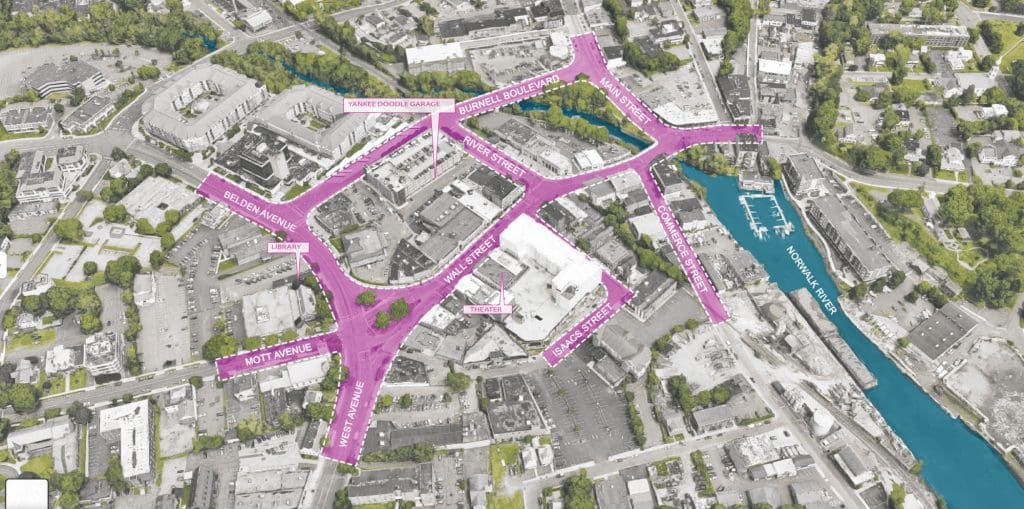
The proposal comes as Norwalk continues to face pressure around housing availability and affordability, with zoning and development strategies drawing both support and concern from residents and officials across the city.
The petition is intended to build public awareness and support for a set of zoning changes the group has discussed for years, including adjustments to parking requirements, housing density, and affordable housing rules.
“The petition is just the one way of putting out there the zone changes we’re requesting,” said Wall Street Neighorhood Association member Jason Milligan, describing it as part of a broader effort to continue improving the neighborhood.
Focus on enabling smaller, more accessible housing
At the center of the proposal is a push to change how zoning regulates residential units in the district.
Supporters argue that current rules cap the number of units allowed per building, encouraging developers to build fewer, larger, and more expensive apartments.
“Where it clicked for me was understanding that because of the regulations now, it favors developers developing larger units,” Wall Street Neighborhood Association member Marc Alan said.
They say adjusting those rules would allow for more smaller units within existing buildings — an approach they believe would better support artists, students, and younger residents.
Similar strategies have been explored in other cities, like Hartford, to increase housing supply, but results can vary depending on market conditions and implementation.
“When I understood that… it would allow for a developer to create smaller, more affordable units and more of them, that becomes attractive,” Alan said.
Supporters described the goal as making it possible for people who already work and create in the district to live there as well.
“They come here to work, they come here to play, they come here to create. But they should be able to live here,” Alan said.
Parking changes tied to district-wide approach
The proposal would also reduce or eliminate parking requirements for many properties, instead treating parking as a shared resource across the district.
Supporters say that reflects the reality of Wall Street’s historic buildings, many of which cannot accommodate on-site parking.
“If you’re a developer… you have to create a certain number of parking spaces… but in a historic building, you can’t create new parking,” Alan said.
They argue that constraint contributes to larger, more expensive units, as developers must offset parking requirements.
At the same time, supporters acknowledged the approach will not address every concern.
“We can’t solve everything,” Milligan said, pointing to broader city-led efforts around infrastructure and planning.
Affordability framed outside traditional programs
The proposal also seeks to adjust how affordable housing requirements apply to smaller projects, allowing developers to contribute to a housing fund rather than include deed-restricted units.
Supporters drew a distinction between formal “affordable housing” and what they describe as lower-cost market-rate units.
“We are affordable down here, we don’t get credit for it in the capital-A sense,” Milligan said, referring to state-defined affordability programs.
They argued that reducing regulatory and compliance costs could make it easier for smaller developers to create more units overall.
“There’s a cost to it… and all costs do get eventually passed through,” Milligan said.
Petition framed as a small step within a broader vision
Supporters repeatedly emphasized that the proposed changes represent a limited adjustment rather than a large-scale transformation.
“This is one small piece,” Milligan said, describing the proposal as a narrow set of changes within a larger set of ongoing developments in the area.
The group is seeking to implement the overlay as a pilot program that could be revisited if it does not achieve the intended results.
“We think it will work. We want the chance to try,” Alan said.
Vision centers on a live-work community
Supporters said the broader goal is to build a neighborhood where people can live, work, and participate in the local arts and business community.
“We always talk about people who work in this area, who create in this area, play, and we want to add live to that,” Alan said.
The group described that vision as critical to sustaining the district’s identity as an arts-focused area and supporting long-term economic growth.
“If you have nowhere to live, you’re going to leave,” Alan said, referring to students, artists, and young professionals who may otherwise move out of Norwalk.
They also pointed to the relationship between residential density and business activity.
“You need people. People need things to do. You need stores, but those stores need customers,” Alan said.
Economic and community impacts cited
Supporters said increasing the number of residents in the area would help drive foot traffic, support events, and strengthen local businesses.
“The whole goal… was to drive more people down here,” Milligan said, adding that increased density could help “economically raise everybody.”
They also emphasized the role of events and community activity in shaping the neighborhood.
“There are social benefits to events that go beyond the economics,” Alan said, citing stronger neighborhood connections and increased public safety tied to active public spaces.
Petition intended to build awareness
Supporters said the petition is meant to give residents a way to engage with the proposal and signal support as discussions continue.
“This is just… to bring attention to what we’re doing,” Milligan said.
They said the effort reflects the association’s ongoing work to shape the neighborhood’s future, which has evolved significantly over the past decade.
“We all want the same thing for the neighborhood,” Milligan said. “How you get there is all of the above.”
The proposal is expected to be part of ongoing discussions as city officials and residents continue to weigh how best to balance housing, economic development, and neighborhood character in Norwalk.



Leave a Reply
You must Register or Login to post a comment.