

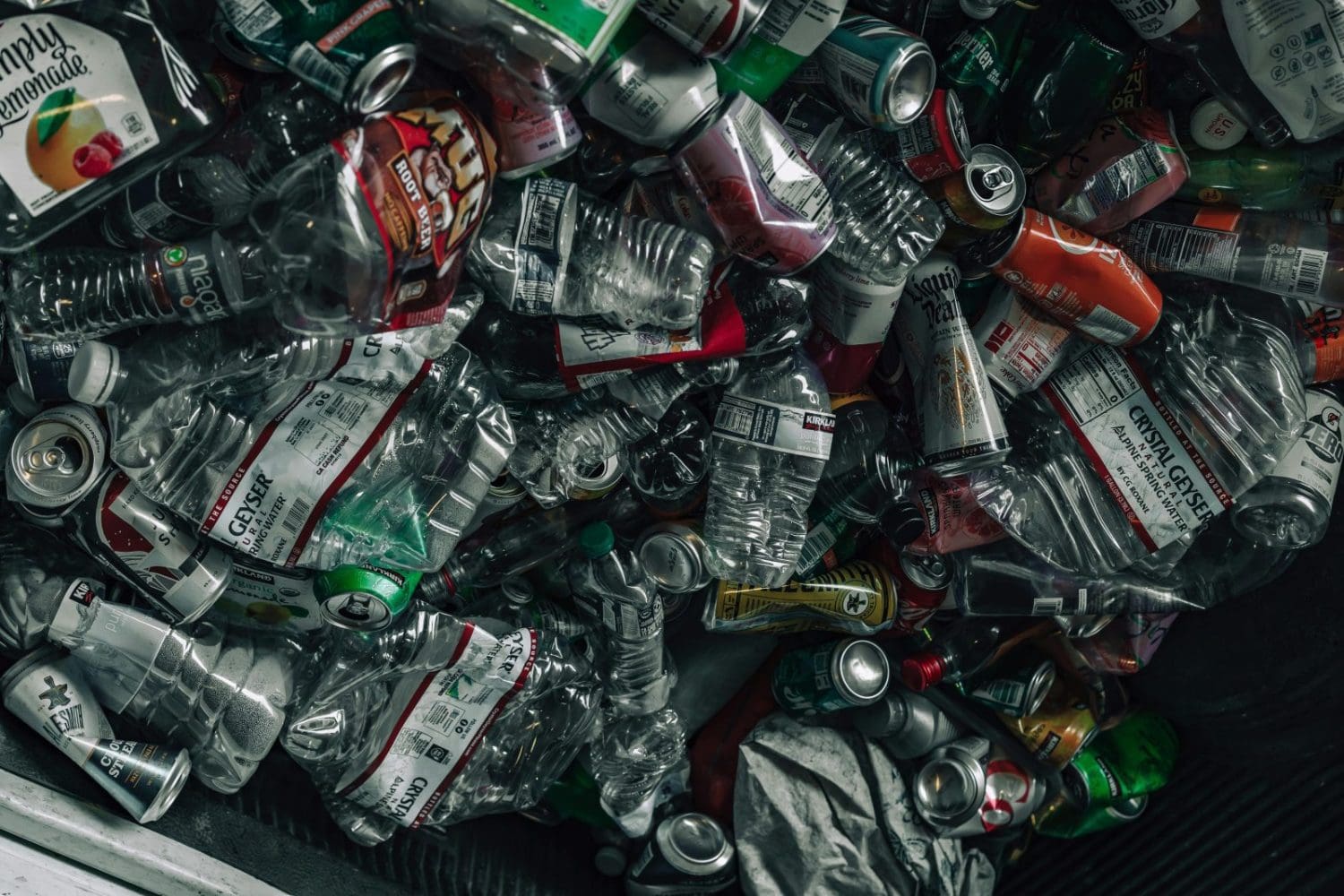
NORWALK, Conn. — Nearly one in five items placed in Norwalk’s recycling bins in 2024 could not be recycled, though the city’s contamination rate remains well below the national average, according to a city audit.
The audit found that, while the national average contamination rate was around 35%, the contamination rate for items collected in Norwalk’s recycling program was 19%.
Norwalk’s contamination rate means nearly one in five items placed in recycling bins cannot be processed and must be removed during sorting, adding to disposal costs and reducing the program’s efficiency.
Mayor Barbara Smyth said recycling plays a critical role in reducing those costs and protecting environmental resources.
“Here in Norwalk, by making recycling, reusing, and reducing a priority, we are investing in a cleaner, more sustainable future for our community now and for the next generation,” Smyth said.
Recycling tips from Norwalk
City officials said reducing contamination depends largely on resident behavior.
Thomas Szabo, Norwalk’s waste and recycling program manager, offered several tips for improving recycling practices:
- Recycle only what is accepted
- Empty and rinse your containers, and keep them loose to avoid jamming sorting equipment
- Focus on the bottles and tubs
Szabo said, “Residents should contact customer service if they have questions on recycling eligibility for their residence,” in a statement.
What Can — and Can’t — Be Recycled in Norwalk
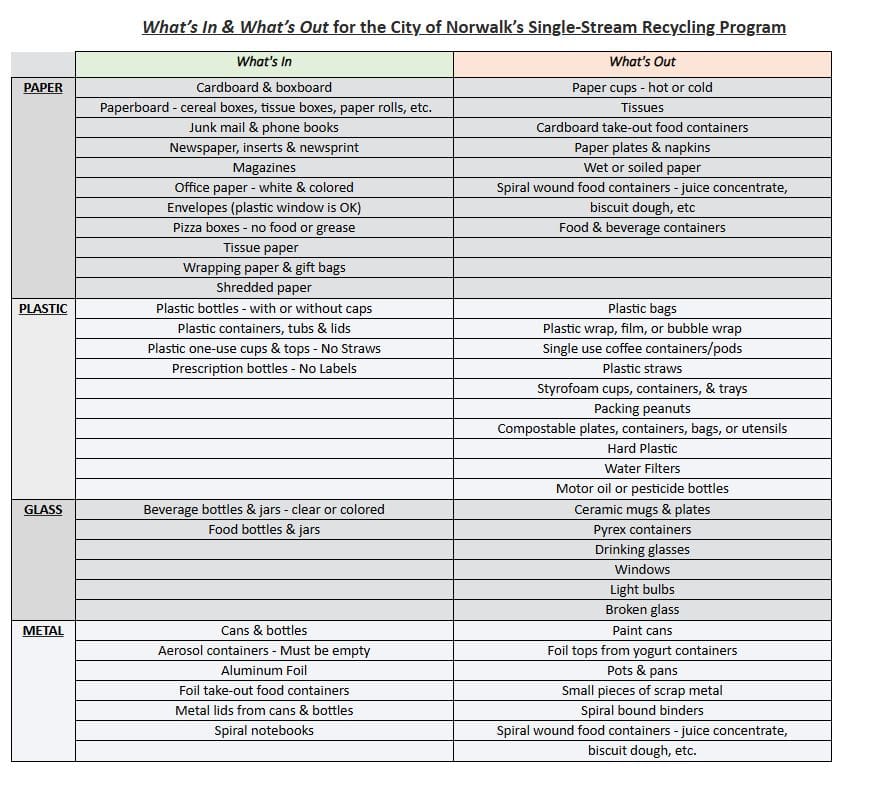
City guidance breaks recycling into four main categories: paper, plastic, glass, and metal — with strict limits on what is accepted.
For paper, residents can recycle items such as cardboard, newspapers, magazines, and office paper, as well as pizza boxes, provided they are grease-free. Items like tissues, paper towels, napkins, and food-soiled paper are not accepted.
Plastic recycling is limited to bottles, containers, tubs, and lids. Plastic bags, wrap, foam containers, and single-use coffee pods are not recyclable through the city’s program.
Glass recycling includes bottles and jars but excludes items such as drinking glasses, ceramics, windows, and light bulbs.
For metal, residents can recycle aluminum foil, cans, and empty aerosol containers. Scrap metal, cookware, and small metal items are not accepted.
Across all categories, contamination often comes from food residue or items that resemble recyclables but cannot be processed through standard facilities.
Where Recycling Goes After Collection
After collection, materials are transported to a regional materials recovery facility in Stamford, where recyclables are sorted by type.
“After sorting, materials are compacted into large, dense bales by commodity type,” Szabo added.
Marketable materials are then sold and sent to manufacturers to be turned into new products, while non-recyclable or contaminated material [are] removed during sorting.
Norwalk sent 8,737 tons of recyclables to the Taylor Reed Material Recovery Facility in Stamford in the 2024 to 2025 fiscal year.
Reducing by Reusing
Szabo advised residents that avoiding single-use and non-recyclable items is the best way to reduce costs associated with waste and recycling management.
“Recycling is the last step, not the first.”
City of Norwalk Waste Programs Manager, Thomas Szabo
The Norwalk Transfer Station and Food Scrap Recycling Stations
Szabo invited residents to use Norwalk’s transfer station and the food scrap recycling stations.
The city’s website indicated that the stations are located at:
- The main entrance of Cranbury Park (open daily, from 7 a.m. to 7 p.m.)
- Behind the library at the Rowayton Community Center (open on Mondays from 8:30 a.m. to 1:30 p.m.)
- 61 Crescent Street (open Monday to Friday 7:30 a.m. to 3:00 p.m. and on Saturday from 7:30 a.m to 2 p.m.)
Residents must have a disposal pass to use the transfer station on Crescent Street, according to Norwalk’s website.


Leave a Reply
You must Register or Login to post a comment.