

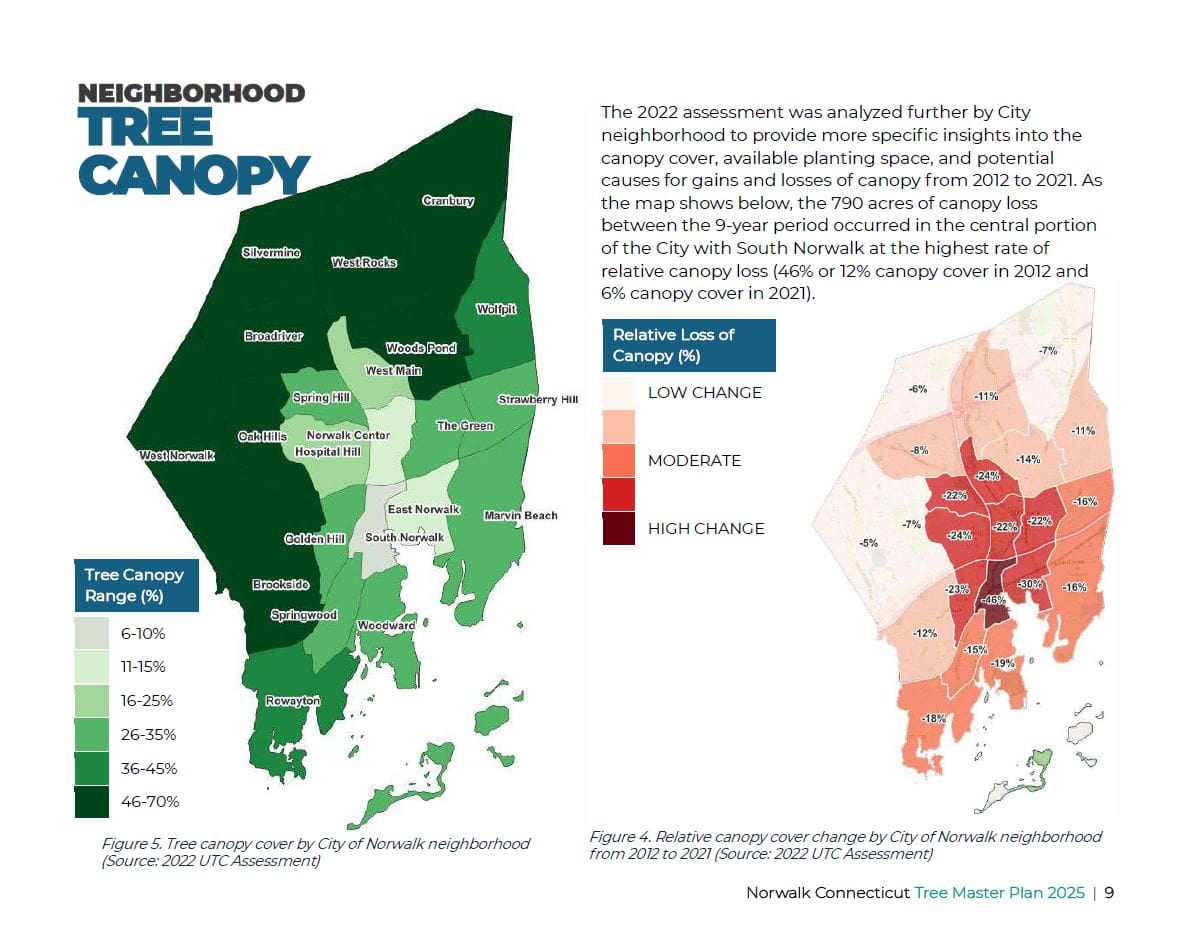
NORWALK, Conn. — The Norwalk Common Council adopted the city’s first-ever Tree Master Plan on April 22, setting a 30-year goal to increase canopy coverage from 43% to 53% through a data-driven, equity-focused planting strategy.
“The quality of life for Norwalk’s community members is strongly influenced by the urban forest,” the plan states. “Protecting, maintaining, and expanding Norwalk’s urban forest is essential to preserving and improving the quality of life for all residents.”
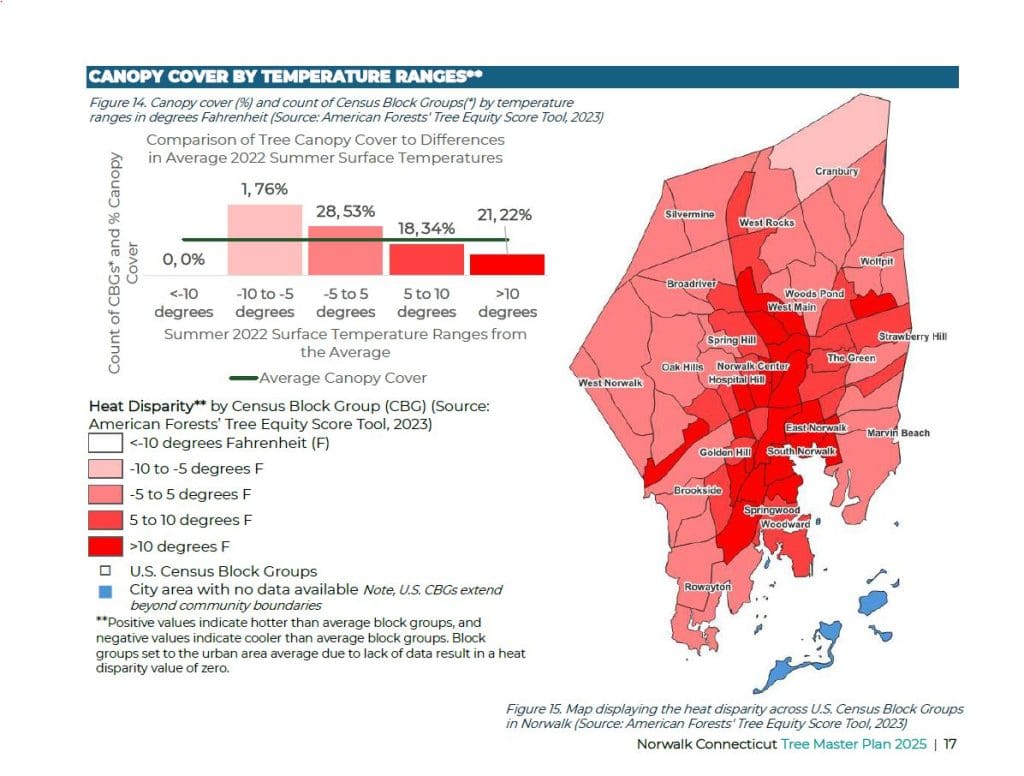
The Tree Master Plan outlines the planting of approximately 64,000 trees over three decades, with a focus on South Norwalk, East Norwalk, and other underserved neighborhoods designated as Priority 1 under the federal Justice40 initiative. “To achieve this, a total of 1,750 trees are needed in Springwood—70% on public property… and 10% through private development,” the plan reads.
During the Common Council meeting, Recreation and Parks Director Robert Stowers described the plan as “a commitment to sustainability, equity, and fiscal responsibility.” He said it would address “public health, storm water management, and property values” across the city.
Arborist and horticulturist Sarah Cruz emphasized the collaborative nature of the plan, telling the Council: “This was made possible through public participation, volunteerism, grants, and community engagement.”
The plan is based on a 2022 baseline canopy assessment, which utilized high-resolution aerial imagery from 2021. “This study found that 43% of Norwalk’s 14,423 total land acres are covered by the canopy of trees when viewed from above,” the plan notes.
Beyond planting new trees, the city also aims to protect the existing canopy. “No net loss” is a stated strategy for neighborhoods already approaching or exceeding their canopy goals.
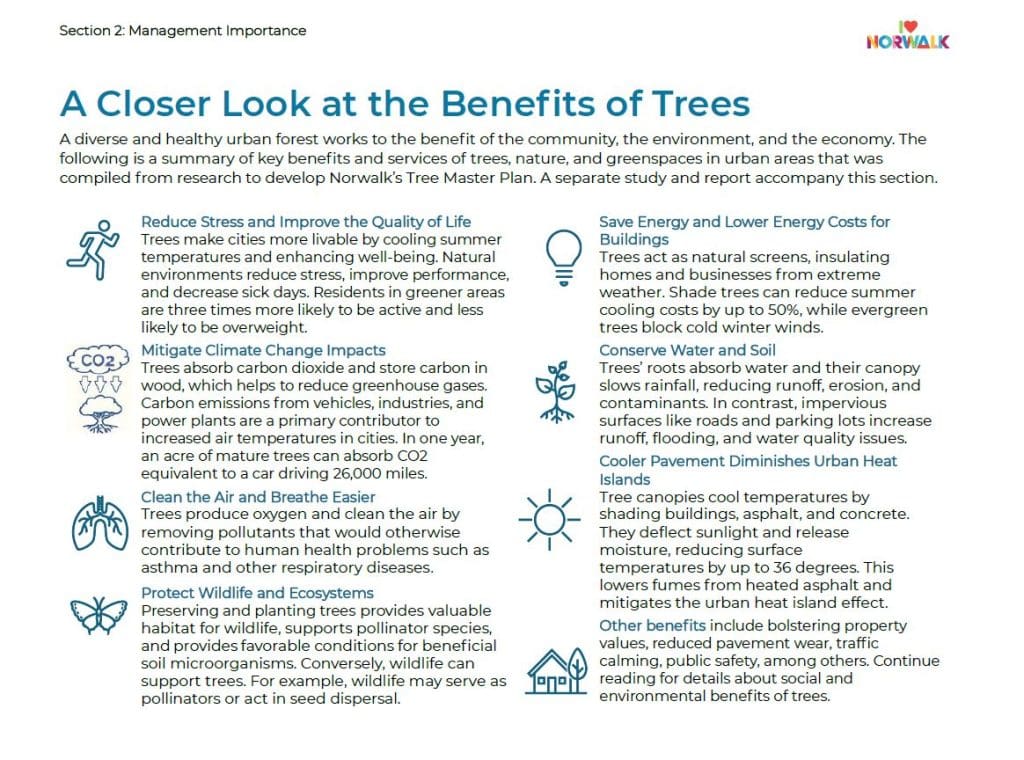
Economic impact is another key consideration. According to the plan, Norwalk’s urban forest saves the city $3 million annually by reducing stormwater runoff, capturing carbon, and removing air pollutants. “Urban forests in Connecticut play a crucial economic role, contributing $1.2 billion annually and employing 11,994 people,” the plan states.
Cruz said during the Council session that the plan “will serve the city for generations,” and added, “It’s not just a document. It’s a blueprint for action.”
The Council approved the plan unanimously. No members opposed or abstained.


Leave a Reply
You must Register or Login to post a comment.