

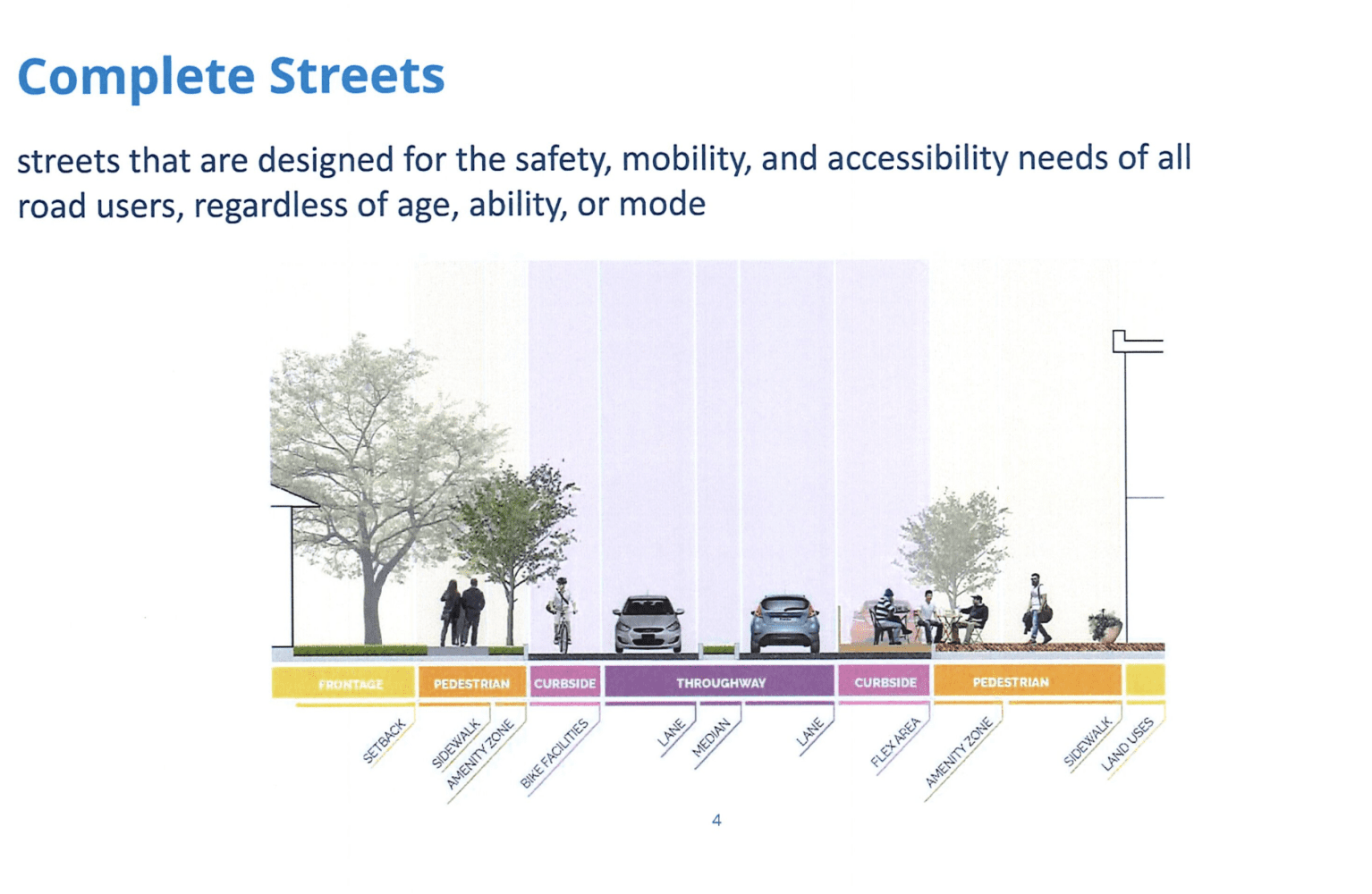
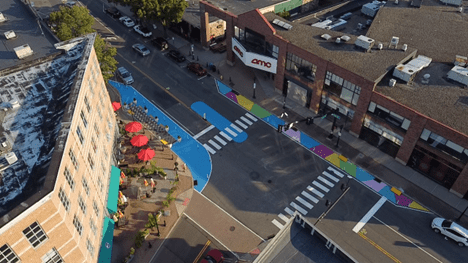
Norwalk’s Complete Streets ordinance, which sets standards for safer and more accessible city streets, is headed for final approval by the Common Council and adoption in November.
The council’s Ordinance Committee voted unanimously Tuesday to send the ordinance to the full council for adoption at its November 12 meeting. If approved, the measure will go into effect within 30 days.
“The main goal of Complete Streets is to make our streets walkable and safer and multi-user friendly,” said Council member Josh Goldstein, who played a large role in drafting the ordinance. “It’s not just cars on the road. it’s so that people have access to public transportation. People can bike, people can walk, people can, if they are in a wheelchair, they can get from point A to point B,” .
The ordinance spells out policies and requirements that would help make the city’s streets safer and more accessible for all users, including pedestrians, bicyclists, public transit riders, and drivers.

“It is the policy of the City to implement an integrated and connected mobility system of complete streets that serve all neighborhoods’, districts’, and populations’ current and future needs,” the ordinance reads. “All transportation projects shall advance the goals of creating equitable, accessible, and convenient travel options along and across streets for users of all ages and abilities and for all modes of transportation.”
The ordinance lays out goals for the city including creating a “consistent high-quality mobility system,” by completing efforts like the Norwalk River Valley Trail and enhanced sidewalks and bike lanes. It also directs the city to develop a “Complete Streets Design Guide,” which lays out guidelines for road and street projects in the city.
It also outlines the role that the director of Transportation. Mobility, and Parking will play as the “Complete Streets coordinator” in making sure that plans, designs, and projects follow the design guide and are implemented. The ordinance also establishes a “Complete Streets Committee,” which includes city staff members, such as the Chief of Operations, the ADA Coordinator, and Director of Planning and Zoning, as well as the Chair of the Bike/Walk Commission, that is tasked with reviewing any requests for exemptions or exceptions.
Jim Travers, the city’s director of Transportation. Mobility, and Parking, highlighted that this was a next step for the work his team had already been doing alongside the city’s Department of Public Works.
“It’s a great investment for us, but there are many things that we’ve been doing—what the Complete Streets process has done is really codify those,” he said.
Members of the public also voiced their support for the ordinance, stating that they believe it will make the streets safer.
Becca Stoll, a resident of East Norwalk, specifically highlighted how she hopes the ordinance will better connect the neighborhoods to the train station.
“I live in East Norwalk, where I think that Complete Streets would do us an absolute world of good,” she said. “I’m wholeheartedly in favor of adopting the ordinance. Specifically, I think that it’s going to make that last mile commute feel safer for a lot of people who Metro North commute off peak and after dark. I count myself in this category. I regularly train after 10 p.m. from New York City due to my work schedule.”
Others, like resident Ku’uipo Fales, said she hopes the additional emphasis on future investments in sidewalks and bike lanes will make it easier to get around without always using a car.
“I spend a lot of time driving between Cranbury and Marvin Beach—I cannot get from Cranbury to Marvin Beach in 15 minutes in a car,” she said. “I’m really looking forward to the day that I can get from those two parts of town on a bus or on a bike within 15 minutes. We live about a mile from the Merritt 7 train station. It takes us an hour and a half on public transportation, and we could walk it in far less, but you can’t, because there’s no sidewalks or crosswalks.”
Tanner Thompson, former chair of the Bike/Walk Commission, voiced his support for the ordinance, highlighting both safety and economic benefits.
“Complete Streets is going to improve the quality of life for Norwalkers,” he said. “It’s going to improve public health in Norwalk. It’s going to obviously improve environmental sustainability in Norwalk. But one point that I think isn’t talked about quite enough is how Complete Streets are good fiscal policy.”
Thompson said that roadway improvement projects for cars are often very expensive.
“I think we’re looking at a quarter of a billion or so of federal and state money to rebuild the interchange between Route 7 and the Merritt [Parkway],” he said. “If even a 10th of that was allocated to projects for walking and biking and public transit, that would pay huge dividends in Norwalk,” he said. “Complete Streets is going to be a win on many levels, but one of those is a fiscal level, as every dollar invested in walking and biking will pay back benefits tenfold.”
Emily Burnaman, the current chair of the city’s Bike/Walk Commission, said she believed the ordinance was “a significant step towards creating a safer, more positive and accessible and inclusive transportation network for Norwalk residents.”


Leave a Reply
You must Register or Login to post a comment.