

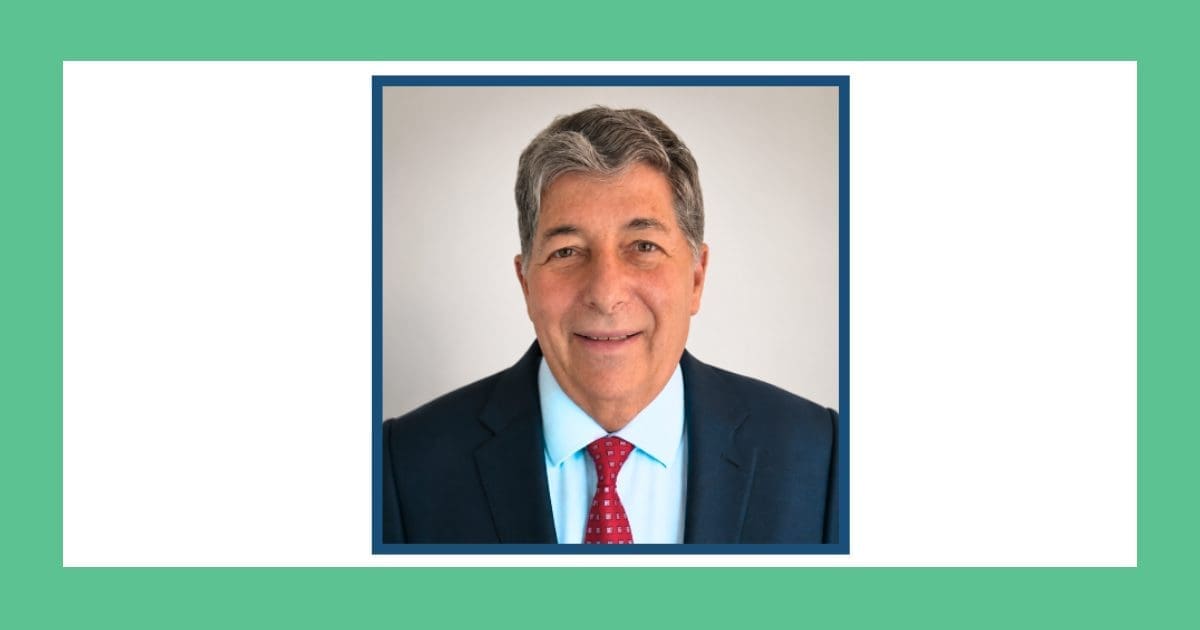
NORWALK, Conn. — As part of NancyOnNorwalk’s Candidate Central coverage, Republican candidate Michael Ted Goldstein answered a series of questions about his campaign for Connecticut’s 4th Congressional District seat, currently held by Rep. Jim Himes.
Goldstein’s answers are presented below as submitted, with no changes to content.
Editor’s Note: Republican primary candidate Daniel Miressi was also sent this questionnaire, and his answers were previously published.
Jim Himes has held this seat since 2009 in a district that leans Democratic. What is your path to winning in November, beyond “energizing the base”?
My path to victory is focused on bringing federal solutions to the local problems affecting the people of Connecticut’s Fourth Congressional District.
Jim Himes has remained in office, in part, because many voters are not fully aware of his failure to use his position in Washington to improve their daily lives. Republican candidates have also failed to consistently reach voters with a clear message: the people of this district deserve better representation.
Jim Himes first took office in 2009. If he has not solved the problems he went to Washington to address during the past seventeen years, voters should be realistic about whether another two-year term will produce different results.
Healthcare is one of the clearest examples. It affects every American, whether the issue is access to care, the affordability of insurance and prescription drugs, or the ability of physicians to provide treatment without interference from government and insurance-company bureaucracies. Healthcare accounts for nearly 20 percent of our nation’s economy, yet Americans continue to pay more while struggling to access the care they need. Despite serving in Congress since 2009, Jim Himes has not delivered meaningful improvements in healthcare access, affordability, transparency, or patient outcomes.
My medical and legal background provides a major distinction between Jim Himes and me. As a practicing physician, I understand how policies written in Washington affect patients, families, doctors, hospitals, and medical practices. As an attorney, I understand how to evaluate legislation, reform regulations, hold powerful institutions accountable, and turn practical healthcare solutions into effective federal law.
By informing voters about my medical and legal experience and presenting concrete solutions to reduce costs, improve access, accelerate safe medical innovation, and confront improper insurance denials, I can offer the district something Jim Himes cannot: firsthand healthcare expertise combined with the legal knowledge necessary to act on it.
Voters also deserve to know that Congressman Himes consistently follows the Democratic Party’s agenda, voting with his party approximately 95 percent of the time. He has opposed legislation intended to strengthen election integrity and remove illegal immigrants who defraud the government or commit violent crimes against women and children. As the ranking Democrat on the House Intelligence Committee, he failed to speak honestly about President Biden’s evident mental decline and the national-security concerns it created. He will also continue empowering the socialist wing that is gaining influence within the Democratic Party.
Our country faces enormous economic and social challenges. The Fourth District needs a new representative with the professional experience, independence, and practical knowledge necessary to participate meaningfully in solving them.
Our overpriced and excessively bureaucratic healthcare system must put patients ahead of government agencies and insurance-company administrators. Social Security is at risk because of mismanagement and abuse, but it can be protected and strengthened. We also owe younger Americans a future that includes economic opportunity, attainable homeownership, workforce training, and access to well-paying jobs in industries facing labor shortages.
My path to victory is to reach voters in every community, explain who I am, present practical solutions, and show them what independent and effective representation can accomplish in Washington. By contrasting Jim Himes’s seventeen-year record with my experience as both a physician and an attorney, particularly on healthcare, affordability, and economic opportunity, I believe we can build a broad coalition that reaches far beyond the traditional Republican base.
Would you support increasing, maintaining, or reducing federal funding for Long Island Sound restoration and harbor dredging? Why?
I support maintaining and, where justified by measurable results, increasing cost-effective federal funding for Long Island Sound restoration, harbor dredging, wastewater improvements, and coastal protection.
Long Island Sound is an essential environmental, economic, and recreational resource for coastal Connecticut. Our harbors must be properly dredged so commercial, recreational, and emergency vessels can navigate safely. Connecticut’s fishing, shellfish, and oyster industries depend on clean water to produce safe and marketable products. Residents and tourists are entitled to clean beaches, open waterways, and a healthy coastline.
When environmentally appropriate, dredged materials can also be beneficially reused for coastal restoration, beach management, erosion control, landfill projects, and other approved purposes.
Protecting Long Island Sound is a clear example of how federal authority can be used to solve a local problem. Existing federal environmental laws must be enforced to stop pollution before it reaches the Sound.
Hartford’s poorly planned housing mandates encourage development without ensuring that adequate wastewater infrastructure is in place. We have seen the consequences after major storms, when sewage overflows contribute to beach closures and public-health warnings. Communities such as Wilton depend on Norwalk, to process wastewater, placing additional pressure on already-burdened systems.
The Sound must be protected for the public benefit of our beaches and communities, as well as for the private industries that create jobs, support Connecticut workers, and contribute to economic growth.
Federal tariff policy has affected Connecticut manufacturers and small importers. Name one specific tariff you would change or remove, and one you would keep.
Tariffs can be an effective tool for reducing America’s dependence on foreign countries for essential goods and strategic materials. However, tariffs must be applied carefully because some products and components cannot presently be sourced in sufficient quantities within the United States. Other countries may also retaliate by imposing tariffs on American exports.
I would maintain strong tariffs or other trade protections against subsidized Chinese pharmaceutical ingredients and related medical products when those imports undermine domestic production.
During the COVID-19 pandemic, the United States discovered how dangerously dependent we had become on China and other foreign countries for active pharmaceutical ingredients and essential medical supplies. We should promote domestic manufacturing of medications and critical ingredients so that Americans are never again placed in that vulnerable position.
At the same time, I would reduce or suspend tariffs on specialty metals and components required by Connecticut’s defense manufacturers when those materials are unavailable domestically and are being imported at fair-market prices rather than dumped below cost.
Companies such as Sikorsky, Electric Boat, and Pratt & Whitney depend on specialized materials and components. Tariffs should not unnecessarily raise costs, delay production, or weaken America’s defense-industrial capacity. Wherever possible, we should incentivize domestic production and gradually reduce our dependence on foreign suppliers.
President Trump has proposed using tariffs against foreign generic-drug manufacturers to encourage the return of pharmaceutical production to the United States. I support the objective of rebuilding domestic generic-drug manufacturing. However, tariffs should be combined with tax incentives, regulatory reform, procurement preferences, and other policies that preserve affordable drug prices while encouraging manufacturing and innovation in America.
Would you have voted for the most recent federal budget reconciliation bill considered by Congress? If not, identify the specific provision that would have changed your vote.
I would have voted for the reconciliation bill.
Budget reconciliation is not the same as a traditional comprehensive federal budget. Congress first adopts reconciliation instructions relating to spending, revenue, or the public debt. House and Senate committees then develop legislation within those instructions, and the two chambers must ultimately resolve any differences.
The legislation included approximately $95 billion, including roughly $73 billion for defense, $12 billion in agricultural assistance, and $10 billion for election integrity.
The defense funding was significantly below what the Department of Defense had requested. Recent military operations and the conflict involving Iran have reduced important stockpiles, and those supplies must be replaced. The United States cannot allow its military readiness to deteriorate in an increasingly dangerous world.
Agricultural assistance has long been used to protect American farmers and preserve the stability of our food supply during periods of economic or environmental crisis. Supporting farmers is not merely a rural issue; it is a national-security and food-security priority.
I also support responsible investments in election integrity. Connecticut has experienced serious concerns involving absentee ballots and election practices, most visibly in Bridgeport. The public must have confidence that every lawful vote is counted and that election fraud is investigated and prevented.
For those reasons, I would have supported the bill.
Which federal transportation investment would be your highest priority for the 4th District, and what lower-priority transportation spending elsewhere would you be willing to cut?
My highest transportation priority would be improving the Metro-North corridor and Interstate 95 throughout the Fourth Congressional District, including rail bridges, station infrastructure, highway bottlenecks, entrance and exit ramps, and traffic-management systems.
Connecticut was authorized to receive approximately $5.38 billion in federal transportation funding for fiscal years 2022 through 2026, and the Connecticut Department of Transportation has a capital plan exceeding $16 billion for 2025 through 2029. Yet only a relatively small share of that investment is directed toward the Fourth District.
The Federal Railroad Administration awarded funding for several Connecticut rail and bridge projects in 2024. While the Cos Cob Bridge received funding for a replacement study, major construction funding went to projects outside the Fourth District, including the Hartford Line and Hartford-area station improvements.
The Fourth District is one of Connecticut’s primary economic engines. It has some of the state’s highest traffic volume, the greatest dependence on Metro-North, and critical commercial connections to New York City. Nevertheless, too much transportation funding is directed elsewhere while our commuters sit in traffic, rail bridges age, and businesses lose productive hours.
I would prioritize modernization of the Metro-North New Haven Line, replacement and rehabilitation of aging rail bridges, improvements to Interstate 95 between the New York border and Bridgeport, safer and longer highway entrance and exit ramps, traffic-flow improvements near Stamford, Norwalk, Greenwich, and Bridgeport, and better connections between rail stations, business districts, and residential communities.
I would reduce or delay lower-priority Hartford-area projects that do not address comparable congestion, safety, or economic needs. Federal transportation dollars should be directed toward projects that produce the greatest regional and national economic return.
These investments should also maximize their benefit to Connecticut. Whenever legally and practically possible, Connecticut contractors, workers, manufacturers, engineers, and suppliers should participate in executing the projects. Too much of the economic value currently leaves Connecticut and goes to companies based in New York, Massachusetts, or overseas.
Federal infrastructure spending should not merely build a project. It should also build Connecticut’s economy.
Do you support the current federal immigration enforcement approach, including workplace raids? Would you change anything about how it is applied in Connecticut specifically?
The Biden administration allowed an unprecedented breakdown of our immigration system, resulting in millions of illegal entries by economic migrants, criminals, gang members, and individuals who may present national-security concerns.
For decades, the United States also tolerated illegal immigration as a substitute for a rational legal-worker program. That was a mistake. When foreign workers are genuinely needed to fill labor shortages, they should enter through a lawful visa system, undergo appropriate screening, pay taxes, and follow a defined process for remaining in the country.
Immigration enforcement should prioritize individuals who present the greatest threat to public safety and the integrity of our institutions. That includes violent criminals, gang members, terrorists, individuals who commit fraud against government programs, and those who abuse women and children.
In Connecticut, federal authorities should improve cooperation with local law enforcement so that dangerous offenders are not released back into communities. Enforcement should be targeted, lawful, and focused on public safety rather than conducted merely to generate arrest statistics.
Workplace enforcement is appropriate when employers knowingly and systematically exploit illegal labor, commit document fraud, or use unauthorized workers to drive down wages. However, enforcement should be accompanied by a workable legal-visa system for industries that can demonstrate legitimate labor shortages.
Ideally, there should be no illegal immigration. Foreign nationals who are necessary to the economy should be admitted legally through employment visas or other lawful programs.
Illegal labor should never be used to suppress the wages of American workers. Likewise, H-1B and other employment visas should not be used to replace qualified Americans who are available and willing to perform the work.
Immigration is a complicated issue with many moving parts. It requires secure borders, effective enforcement, lawful employment pathways, cooperation between federal and local authorities, and ultimately a bipartisan legislative solution.
Connecticut is home to major gun manufacturers as well as strict state gun laws. Would you support any changes to federal gun legislation, and how do you square that with the state’s manufacturing base?
The Second Amendment protects an individual constitutional right to keep and bear arms. Federal and state legislation must comply with that right and with the decisions of the United States Supreme Court.
Connecticut is home to a significant firearms-manufacturing industry, with approximately 20 to 24 manufacturers. In 2021, a substantial majority of the firearms manufactured in Connecticut were produced by Colt Manufacturing in West Hartford. These companies are already subject to extensive federal regulation through the Bureau of Alcohol, Tobacco, Firearms and Explosives, federal firearms licensing requirements, the National Firearms Act, the Gun Control Act, and strict Connecticut laws.
I am a licensed gun owner. The lawful gun owners I know have tremendous respect for the power of firearms and take gun safety extremely seriously. They understand that firearms must be stored, handled, and used responsibly.
Connecticut’s greatest firearms problem is not responsible, licensed gun owners. It is the criminal possession and use of illegal guns. In some cases, teenagers are recruited or exploited by older criminals because juvenile penalties may be less severe.
As a member of Congress, I would protect the rights of lawful gun owners while supporting stronger enforcement against gun trafficking, straw purchasing, possession by violent felons, and the use of firearms in criminal activity.
I would also push for federal crime statistics to separately report offenses committed by lawful gun owners and offenses committed by individuals possessing firearms illegally. Policymakers and the public deserve accurate data rather than statistics that combine responsible ownership with criminal gun possession.
Protecting constitutional rights, supporting Connecticut manufacturers, promoting firearm safety, and prosecuting violent criminals are compatible goals.
What is your position on federal support for local infrastructure earmarks, and would you request any for this district by name?
I support transparent and accountable federal infrastructure earmarks when they address genuine local needs, produce measurable public benefits, and are subject to proper oversight.
The Fourth Congressional District is in urgent need of stronger federal infrastructure advocacy.
Interstate 95 between the New York border and Bridgeport is among the most congested transportation corridors in the country. Connecticut commuters and businesses lose countless hours sitting in traffic. I would seek federal funding for targeted capacity and traffic-flow improvements, including the potential addition of a fourth or managed lane where feasible, expanded high-occupancy-vehicle capacity during peak periods, and movable-divider technology in heavily congested areas such as downtown Stamford.
I would also seek funding to lengthen dangerous or inadequate entrance and exit ramps and improve the local roads receiving traffic from Interstate 95. A highway improvement is incomplete if vehicles simply exit into another bottleneck.
The district also contains numerous bridges crossing rivers, streams, rail lines, and local roads. Many require rehabilitation or replacement. I would request funding for specific bridge projects after consulting with municipal officials, transportation engineers, emergency responders, and local residents.
Energy infrastructure must also become a federal priority. Connecticut needs additional reliable generating capacity, including natural gas and advanced small nuclear reactors. The transmission and grid infrastructure required to connect those facilities must be modernized and built.
Communities experiencing population growth also need wastewater and sewer-system upgrades. Federal support should help municipalities expand treatment capacity, protect Long Island Sound, and prevent sewage overflows during major storms.
My earmark requests would therefore focus on Interstate 95 congestion and safety improvements, Metro-North bridge and rail modernization, local bridge repair and replacement, exit-ramp and traffic-flow improvements, wastewater-treatment and sewer-capacity upgrades, and electric-grid and generation infrastructure.
The Fourth District sends enormous economic value and tax revenue to Washington. It deserves a representative who will fight to bring an appropriate share of that investment home.
Do you support federal action on prescription drug pricing or health insurance claim denials? What specific bill or approach would you back?
As a physician, I support federal action to reduce prescription-drug prices, streamline the approval of safe medications and medical devices, and impose meaningful consequences on insurance companies that improperly deny necessary care.
High drug prices are caused in part by the slow, expensive, and overly bureaucratic regulatory process for approving new medications, medical devices, and procedures. It is not uncommon for a treatment to be approved in Europe years before it becomes available in the United States. Pharmaceutical and medical-device companies build the cost and uncertainty of that regulatory process into their prices.
The Food, Drug, and Cosmetic Act should be modernized. The Food and Drug Administration should make greater use of artificial intelligence, advanced modeling, real-world evidence, and improved clinical-trial designs to evaluate treatments more efficiently without compromising patient safety.
Reducing approval costs and delays would encourage more companies to enter the market, increase competition, and promote the experimentation and innovation needed to develop better treatments.
Most-favored-nation pricing may reduce certain drug costs, but it must be implemented carefully so that it does not discourage research and development. The Inflation Reduction Act authorized Medicare drug-price negotiations for selected medications. The government should build upon that framework while also increasing transparency, competition, and accountability throughout the pharmaceutical supply chain.
New biological treatments and cancer medications remain extraordinarily expensive. Streamlining the regulatory process, encouraging biosimilars and generics, strengthening domestic production, and reforming pharmaceutical-benefit-manager practices can help reduce those costs.
I also support expanding Right to Try protections for patients with terminal or life-threatening illnesses. Patients who have exhausted approved treatments should have a meaningful opportunity to pursue experimental therapies with informed consent. I have a friend with a rare brain tumor who is willing to accept the risks of experimental treatment, not only in the hope of extending his own life, but also because what doctors learn may help save future patients. That courage is remarkable and should be respected.
Health-insurance claim denials are another major crisis. As a practicing physician, I see the problem becoming worse. Patients suffer when treatment is delayed or denied, and medical practices must spend substantial time and money appealing decisions that should never have been made.
Insurance companies currently face too little downside for improper denials. I would support federal legislation requiring clear and prompt explanations for denials, faster appeals for urgent and medically necessary care, independent physician review, public reporting of denial and reversal rates, financial penalties for repeated or abusive denials, and limits on the use of automated systems to deny care without meaningful clinical review.
The healthcare system must serve patients, not bureaucracies. Doctors should be practicing medicine, not spending hours fighting insurance-company algorithms.
Who are your top three donors or fundraising sources, and would you accept a donation from a PAC tied to an industry you would be voting to regulate?
My three largest donors are personal friends who have no connection to an industry that I would be responsible for regulating. Most of my financial support has come from individuals and small donors who believe in my campaign and want better representation for the Fourth District.
I would evaluate any PAC contribution carefully and comply fully with all campaign-finance disclosure requirements. Accepting a lawful contribution would never obligate me to support a donor’s legislative agenda.
Whether a contribution comes from an individual, a business owner, a labor organization, or an industry PAC, my vote would be guided by my conscience, the Constitution, the available evidence, and the best interests of my constituents.
Campaign contributions do not purchase my vote. The people of the Fourth Congressional District are the only people I would represent as I am accountable to them only.


Leave a Reply
You must Register or Login to post a comment.