

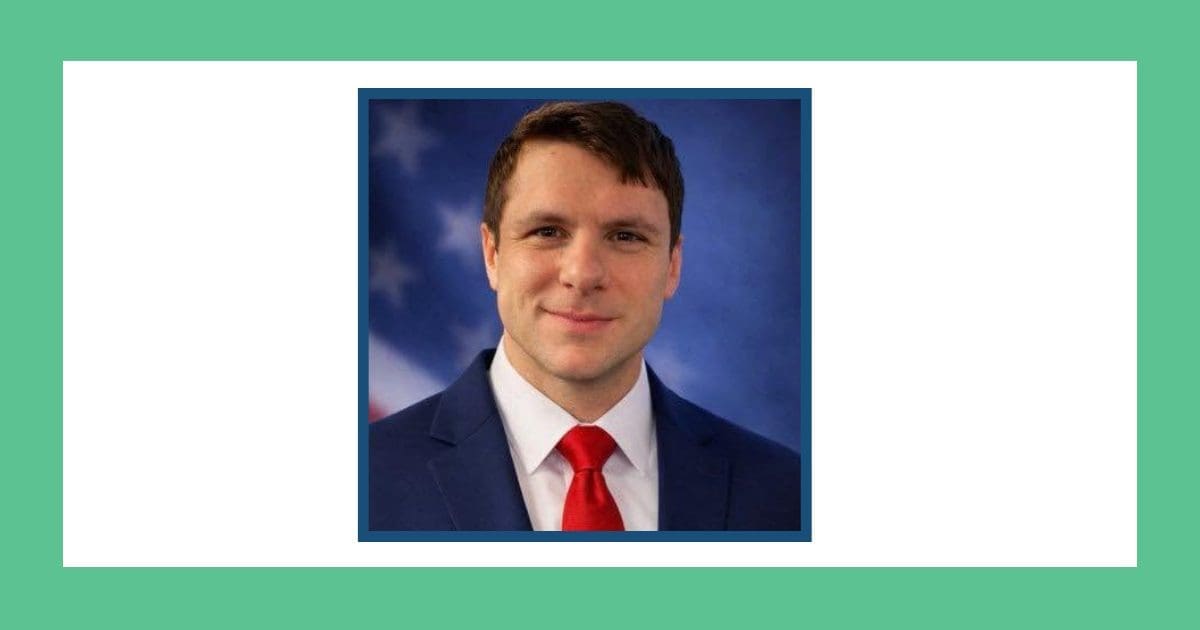
NORWALK, Conn. — As part of NancyOnNorwalk’s Candidate Central coverage, Republican candidate Daniel Miressi answered a series of questions about his campaign for Connecticut’s 4th Congressional District seat, currently held by Rep. Jim Himes.
Miressi’s answers are presented below as submitted, with no changes to content.
Editor’s Note: Republican primary candidate Michael Ted Goldstein was also sent this questionnaire. As of publication, he had not responded. This story will be updated if his answers are received.
Jim Himes has held this seat since 2009 in a district that leans Democratic. What is your path to winning in November, beyond “energizing the base”?
My path is simple: compete for every vote. After 18 years in Washington, Jim Himes has become a representative of Washington and Wall Street. I’ll represent Main Street. I’ll speak directly to Republicans, Unaffiliated/Independent, and Democrats who are frustrated with the cost of living, government dysfunction, and a political class that has ignored younger generations. By giving voters, especially those under 50, a genuine alternative focused on affordability, opportunity, and accountability, I believe we can build the broad coalition needed to win.
Would you support increasing, maintaining, or reducing federal funding for Long Island Sound restoration and harbor dredging? Why?
I believe in prudent policy to maintain the Long Island Sound and Connecticut’s shoreline to keep our ecosystem vibrant. Conservation is a tenet of conservatism: in fact, it’s a duty. However, that does not mean frivolous funding for projects that lack measurable results or proper oversight. Long Island Sound is critical to our state’s maritime economy, commercial fishing, tourism, recreation, and coastal resilience, while harbor dredging is essential to keeping our ports safe, navigable, and economically competitive. I support maintaining, and where justified, increasing, federal funding for projects that demonstrate clear environmental and economic benefits, while ensuring every taxpayer dollar is spent responsibly and transparently.
Federal tariff policy has affected Connecticut manufacturers and small importers. Name one specific tariff you would change or remove, and one you would keep.
I would maintain tariffs on strategic imports from China, including steel, semiconductors, and products critical to our national security, where there is clear evidence of unfair trade practices or economic coercion. However, I would remove or create exemptions for tariffs on manufacturing inputs and components that Connecticut small businesses cannot reasonably source domestically, since those costs are ultimately passed on to American workers and consumers. Tariffs should strengthen American industry and reduce our dependence on adversaries, not become an unnecessary tax on American businesses.
Would you have voted for the most recent federal budget reconciliation bill considered by Congress? If not, identify the specific provision that would have changed your vote.
No. I support many of the underlying policy goals, including border security and tax relief, but I fundamentally oppose the process. Trillion-dollar omnibus and reconciliation bills packed with earmarks, irresponsible spending, and lobbyist-driven giveaways are no way to budget for the American people. Congress should debate and vote on single-subject spending bills so taxpayers know exactly where their money is going and lawmakers are accountable for every vote. We also need meaningful spending restraint and structural reforms to address our national debt instead of continuing to govern through massive, take-it-or-leave-it packages.
Which federal transportation investment would be your highest priority for the 4th District, and what lower-priority transportation spending elsewhere would you be willing to cut?
My highest priority would be modernizing the Metro-North/New Haven Line, repairing aging bridges, improving key interchanges, and addressing traffic bottlenecks throughout Fairfield County. Connecticut’s infrastructure was never designed for the level of growth we’ve experienced, and state policies that incentivize high-density development while reducing local control have only added to congestion. The reality is that cars aren’t going away, so we need to invest in roads, bridges, and traffic-flow improvements alongside rail infrastructure. To help pay for these priorities, I would oppose federal funding for politically motivated transportation earmarks and lower-priority projects with little demonstrated economic value, such as beautification projects, duplicative transit initiatives with low ridership, and earmarks inserted primarily for political favors rather than measurable public benefit. Federal transportation dollars should be directed to projects that improve safety, mobility, and economic productivity.
Do you support the current federal immigration enforcement approach, including workplace raids? Would you change anything about how it is applied in Connecticut specifically?
Yes. I support enforcing federal immigration law, including workplace enforcement actions when employers knowingly hire undocumented workers. In Connecticut, enforcement should not stop with the employee, it should also hold employers accountable. I support imposing substantial civil and criminal penalties on businesses that knowingly employ illegal labor, because removing the incentive to hire unlawfully is essential to restoring integrity to our immigration system.
As a member of Congress, I would also support federal policies that encourage full cooperation between state and local jurisdictions and federal immigration authorities, rather than policies that impede immigration enforcement. We cannot effectively address illegal immigration if different levels of government are working at cross-purposes.
Finally, I support taxing remittances sent abroad by individuals who are unlawfully present in the United States. Someone who chooses to violate our immigration laws should not be able to send American-earned income out of the country without contributing toward the costs that illegal immigration imposes on taxpayers. The goal of immigration policy should be to uphold the rule of law, protect American workers, and restore public confidence that our laws will be enforced fairly and consistently.
Connecticut is home to major gun manufacturers as well as strict state gun laws. Would you support any changes to federal gun legislation, and how do you square that with the state’s manufacturing base?
I support stronger federal protections for the Second Amendment. I also support responsible gun ownership and effective public safety measures. I don’t believe there’s anything to “square away” because Connecticut’s firearms manufacturing heritage and common-sense public safety policies are not mutually exclusive. One concerns constitutional rights and a vital manufacturing sector; the other concerns keeping dangerous people off our streets. Connecticut should embrace its armory and manufacturing legacy instead of treating it as something to distance itself from. We should protect the rights of law-abiding Americans while enforcing existing laws against violent criminals and those who misuse firearms.
What is your position on federal support for local infrastructure earmarks, and would you request any for this district by name?
I don’t support earmarks as political currency. I support transparent federal investment in truly critical infrastructure. For Connecticut’s Fourth District, that means modernizing our energy infrastructure, repairing roads and bridges, improving Metro-North and regional traffic flow, maintaining our shorelines and harbor infrastructure, and revitalizing abandoned industrial and manufacturing sites that have become liabilities instead of economic assets. Federal dollars should be spent on projects with measurable economic and public safety benefits, not on politically connected wish lists or special-interest favors.
Do you support federal action on prescription drug pricing or health insurance claim denials? What specific bill or approach would you back?
I support getting the one-size-fits-all federal government out of the healthcare business and returning more authority to patients, physicians, and the states. That means increasing price transparency, eliminating unnecessary insurance restrictions, allowing consumers to purchase more personalized, a la carte coverage that fits their needs, and fostering greater competition by localizing healthcare markets rather than allowing large hospital systems, insurers, and federal regulators to dictate prices and care.
With respect to prescription drug costs and insurance claim denials, I support reforms that increase competition, expand access to generics and biosimilars, require meaningful price transparency, and ensure insurers provide timely, transparent, and medically justified claim decisions with a fair appeals process. Patients deserve accountability from insurers just as providers deserve a competitive marketplace.
At the same time, I believe states, not Washington, are best positioned to administer healthcare assistance. The federal government’s role should be to support states in providing a basic safety-net package for those truly in need. No American should be left entirely without access to healthcare, but that goal should be achieved through state-driven, patient-centered solutions rather than a one-size-fits-all federal system.
Who are your top three donors or fundraising sources, and would you accept a donation from a PAC tied to an industry you would be voting to regulate?
My campaign is primarily supported by individual donors from Connecticut and grassroots supporters who believe our district deserves new leadership. I will always vote based on what is best for the people of Connecticut’s Fourth District, not any donor. I would accept lawful contributions, but no contribution would influence my votes, and I support full transparency so voters can judge that for themselves.


Leave a Reply
You must Register or Login to post a comment.