

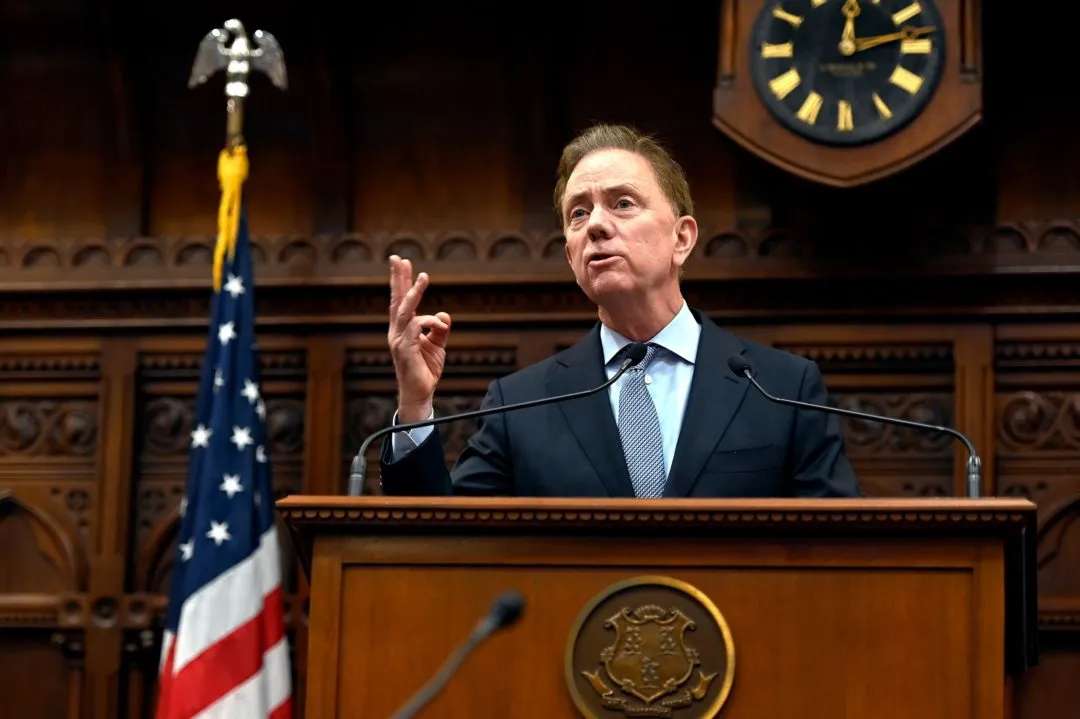
NORWALK, Conn. — Gov. Ned Lamont, a Democratic candidate for reelection, returned NancyOnNorwalk’s candidate questionnaire covering housing, education funding, utility rates, health insurance, and other issues important to Norwalk voters.
His answers are printed below in full, organized by topic.
Editor’s note: NancyOnNorwalk sent the same questionnaire to Lamont and his primary opponent, state Rep. Josh Elliott, on the same day. Elliott’s answers were published first, because he returned his ahead of Lamont.
Housing
Under the 8-30g affordable housing statute, what specific changes would you make, and would they make it easier or harder for a town like Norwalk to reach its housing goals?
“I believe that the best way to address housing issues is based on collaboration. The housing bill I signed into law last year was built around creating a process that has towns choose where and how new housing is built, with the state working to provide the tools, investments and support to make housing happen. Municipalities can take the lead on deciding how to reach housing goals, and we will be there to support and help fund those efforts.
“This represents a major change; before this bill was passed, we were asking towns to comply with 8-30g, but not giving them the tools they needed to make it work. So when a developer ended up relying on that law overriding local authority, some municipalities were unprepared to deal with the costs. Now, we have a system in place that empowers towns to plan and develop new housing projects where it makes sense, close to downtowns, transit, infill plots, or underused commercial land. Thanks to this arrangement, Norwalk will be able to anticipate and plan to reach its targets, have the resources to do so and ultimately, help address our housing challenges.”
Education funding
Norwalk’s Education Cost Sharing grant has not kept pace with enrollment and cost increases. Would you change the ECS formula, and if so, how would that change affect Norwalk specifically?
“The ECS formula must be updated. We were able to fully fund ECS to the level set by the statute two years ahead of schedule, but rising costs required additional funding. This legislative session, I took the step to increase the funding baseline for ECS for the first time since it was adopted in 2013 and added more than $170 million in additional education funding for municipalities, with Norwalk receiving $1,959,389.
“This is a first step toward comprehensive reform. I created a new Blue Ribbon Commission with the sole purpose of looking at how we can update school funding in Connecticut, with the goal of reducing funding disparities, providing additional support to the towns that need it the most, and ensuring that every kid in our state has access to the very best education. Norwalk has one of Connecticut’s fastest-growing school districts and should be getting additional resources under an updated ECS formula.
“At the same time, we have to get this right. Any changes to the ECS formula must be made responsibly and sustainably, without raising taxes or jeopardizing the fiscal stability we’ve worked so hard to achieve over the last eight years. That’s exactly why we’re taking a thoughtful, data-driven approach through the Blue Ribbon Commission with the goal to build a formula that is fair, reflects today’s realities, and supports growing communities like Norwalk that are also sustainable.”
Connecticut has one of the highest per-pupil special education cost burdens in the country. What would you change about how the state reimburses towns for special education?
“My main focus with special education is putting an end to the skyrocketing costs of out-of-district placements. Right now, too many towns are getting hit with massive, unpredictable tuition bills to send kids to specialized private facilities, and it’s crushing local budgets. We shouldn’t have 169 separate towns all scrambling on their own.
“Instead of just writing blank checks to cover those volatile tuition spikes after the fact, I would like to build up strong, high-quality special education programs within the school district. By improving our in-district capabilities, we can keep students in their own communities with their peers, stabilize town budgets, and use the state’s collective bargaining power to finally get a handle on these overarching costs.”
State budget and taxes
Connecticut’s fiscal guardrails (the spending cap, bonding cap and volatility cap) are up for renewal. Would you extend them as written, modify them, or replace them?
“The budget guardrails have left Connecticut in a much stronger financial position than many other states. These common sense budgeting rules have allowed us to pay down $11 billion in debt ahead of schedule, freeing millions of dollars in the general fund, while honoring a commitment made to our workers when they retire.
“We need to be flexible and ensure that although we spend within our means, we also have the resources we need for education, healthcare, continued investments in our people and funds in the event of emergencies like fighting back against Trump’s SNAP and healthcare cuts. I have also worked with the legislature to make modifications over time, including a significant and permanent shift in the volatility threshold last year, a change in the revenue cap two years ago, and adjustments to the spending cap as warranted. And in the budget that just passed, we used over $800 million of capital gains revenue to fund education aid, our early child care endowment, and add funding to our federal emergency response account.
“I support extending the guardrails, with flexibility allowed, because they have helped pay down our pension debt, while freeing up millions to make critical investments elsewhere. They have also restored confidence in Connecticut, earned us multiple credit rating upgrades, and put our finances on a sustainable path. But they were never meant to be absolute. As our economy and our needs evolve, we should continue to make thoughtful adjustments where appropriate while preserving the fiscal discipline that has made Connecticut stronger. My approach would be to spend responsibly within our means, continue paying down debt, maintain a healthy Rainy Day Fund, and make strategic investments that lower costs for families, strengthen our schools, grow our economy, and prepare Connecticut for whatever challenges come next.”
Public Act 26-76 changed how towns can offer property tax relief. Should the state go further and cap or restructure municipal property taxes statewide, or should that stay a local decision?
“Connecticut’s overreliance on the property tax is one of the biggest affordability challenges facing families and businesses, and it’s something we have to continue addressing. That’s why my administration increased state support for municipalities through record education funding, investments in PILOT, and other municipal aid that help reduce pressure on local property taxpayers.
“A one-size-fits-all statewide cap on property taxes is not the right answer. Every community has different needs, and a blanket cap could force cuts to education, public safety, and other essential local services while undermining local decision-making. Municipal leaders and taxpayers should continue to have the primary responsibility for setting their own budgets.
“As Governor, my focus will be on working with the legislature to give towns the tools and resources they need to keep property taxes down through responsible investments, growing our economy, encouraging responsible housing development that broadens the tax base, and maintaining the fiscal discipline that allows us to support municipalities year after year without raising state taxes.”
Name a specific state contract, tax break, or spending line from the current budget that you would eliminate, not just “review.”
“I would eliminate what I consider one of the most unfair taxpayer subsidies in our budget: the implicit subsidy for large, profitable companies that choose not to provide health insurance to their employees and instead rely on taxpayers to cover those costs through HUSKY.
“For too long, some large employers have shifted their healthcare costs onto Connecticut taxpayers while responsible businesses continue to do the right thing and provide quality benefits. That’s why I proposed ending this form of corporate welfare by requiring large for-profit employers that do not provide affordable health coverage to contribute toward the public healthcare costs they create.
“The revenue generated would be used to lower health insurance premiums for middle-class families.”
Utilities
Eversource and UI customers have seen sharp rate increases. What specific state action would you take to lower electric bills, and what tradeoffs or costs would your proposal involve?
“We need to keep holding public utilities accountable. As Governor, I have not only pushed back against rate increases, but actually reduced energy bills thanks to our investments in clean energy, long term contracts to procure electricity from Millstone nuclear plant, and the 2020 ‘Take Back Our Grid Act.’
“I recently presented a plan with additional reforms to lower electric bills. Under my plan, we will include affordability as a regulatory standard, require utilities to periodically renew their franchise or risk losing it if they provide lousy service or high costs, require cost-effectiveness reviews in all new projects, cap utility profits to reflect their true costs, and impose penalties if they fail to deploy technologies, like smart meters, that can reduce costs for ratepayers.
“Rates are already coming down, but if utilities want to be in our state, they’ll have to prove they’ve earned it and Connecticut families will have a watchdog with real teeth to make sure they do.”
Transportation
Metro-North’s New Haven Line carries thousands of Fairfield County commuters daily. What level of state investment do you support for rail improvements over the next four years?
“The New Haven Line of Metro North is among the busiest commuter rail lines in the country, and it is critical for our state’s economy. My administration has made historical investments in rail infrastructure with the goal of reducing travel times by close to half an hour by 2035, adding more frequencies and better service. We are working with the MTA and Amtrak to have Metro North trains running to Penn Station in the medium term, providing faster connections to the West side of Manhattan, Long Island, and New Jersey. Thanks to federal funding, we are also working to replace aging, outdated bridges on the line, starting with the Walk Bridge in Norwalk.
“Over the next four years, we need to continue this work. Reliable rail service supports our economy, helps attract employers and workers, creates opportunities for transit-oriented housing, reduces congestion on our highways, and gives people more affordable transportation options. These investments pay dividends for commuters, businesses, and our state’s long-term competitiveness, and I will continue making them a priority.”
Campaign finance
Name one donor, industry, or interest group whose financial support you would decline, and explain why.
“One of the advantages of funding my own campaign is that I am not beholden to special interests, but to the voters only. My loyalty is to the people of Connecticut and I am proud to accept small-dollar donations for those who believe in our campaign and what we’ve done.”
Health care
Connecticut residents have filed a growing number of complaints against health insurers over denied claims and prescription costs. What specific changes to state law or regulation would you pursue to reduce claim denials and improve insurer accountability?
“My goal for the next four years is to achieve universal access to affordable, quality healthcare for everyone in Connecticut. To achieve this, and keep insurers accountable, we will implement the Connecticut Option, a healthcare plan designed by the state that is focused on offering the best care with the lowest costs. The goal is to offer an alternative to existing plans, forcing them to step up and put patients first, not their bottom line. Colorado adopted a similar plan in recent years, and insurance premiums fell by 15%.”
State workforce
State employee and teacher pension liabilities remain a long-term drag on the budget. Do you support any changes to benefits for future hires, and if so, what?
“Connecticut has some of the hardest working state employees in the country. I believe the current compensation and benefits for new hires offers a good balance between the need to attract talent and long term fiscal sustainability of state employee pension plans.
“Under my administration, as I mentioned, we have been able to significantly reduce outstanding pension liabilities in our state, undoing decades of fiscal mismanagement. This has reduced both long and short term costs considerably, saving taxpayers hundreds of millions of dollars every year, and placing us on a glide path towards fully funding our liabilities.”
Government structure
What is the first structural change you would make inside state government during your first 100 days, and why?
“Education funding, healthcare reform and property tax relief. We expect the Blue Ribbon Commission to have their proposal ready before the 2027 legislative session starts, and I want to tackle it right away. Our kids deserve to have the best education, no matter where they live, and our towns and cities need to have stable, reliable funding to provide it, and provide property tax relief to their residents. Additionally, I am working with advocates and the Comptroller to develop a new way of delivering healthcare, which is one of the biggest cost drivers of our state and local budgets.”
Environment
Long Island Sound flooding and erosion increasingly affect Norwalk’s shoreline neighborhoods. What specific coastal resilience projects would you prioritize, and how would you fund them?
“Climate change is an undeniable reality, and we have to be prepared for its impact on Connecticut’s coastal communities. In places like Norwalk, that means investing in projects that protect neighborhoods, businesses, critical infrastructure, and our shoreline while preserving the natural resources that make Long Island Sound so special.
“My priorities include strengthening and restoring living shorelines and wetlands that naturally reduce storm surge, upgrading infrastructure to reduce flooding, protecting roads, bridges, and rail infrastructure like the Walk Bridge corridor, and helping municipalities elevate or flood-proof vulnerabilities. Through DEEP’s Climate Resilience Fund, we’ve already invested millions of dollars, with both state and federal funding, to help communities plan for and implement these projects.
“We should continue making these investments by maximizing available federal infrastructure and resilience funding while maintaining a strong state commitment. Unfortunately, the Trump administration has been hostile to many climate and resilience programs, making it even more important that Connecticut continues to lead. Protecting our shoreline is not only an environmental priority, it’s an economic one that safeguards homes, businesses, transportation, and the future of communities like Norwalk.”
Transparency
Would you support requiring more disclosure from municipal boards and agencies under the Freedom of Information Act, given documented gaps in how some Connecticut towns interpret exemptions like personnel matters?
“Transparency is essential to maintaining public trust, and I strongly support open government at every level. The Freedom of Information Act is one of Connecticut’s most important tools for ensuring accountability, and it should be applied consistently so the public has confidence that our government is operating in the open.
“If there are gaps or inconsistencies in how municipalities are interpreting the law, I’m open to working with the legislature, municipalities, and the Freedom of Information Commission to clarify those standards. At the same time, we need to preserve appropriate protections for legitimate personnel matters, privacy, and sensitive information. The goal should be greater transparency, clearer guidance, and consistent application of the law across Connecticut.”
On changing his mind
What is one policy position you have changed in the last five years, and what changed your mind?
“I have been consistent in my values and priorities, but I am proud of being open minded on how we can best achieve our goals. Talking with advocates and experts in the field, we came up with an innovative approach to fund early care and education, and to do so in a way that has stable, long term funding, the early childhood endowment fund. Instead of having a line in the budget that legislators need to appropriate every year, putting funding at risk if there is a downturn, or offloading the burden to local governments, we used the extra revenue from excess budget reserves to seed a fund for early care: $300 million in the first year, more than $400 million this year.
“Thanks to this approach, by 2028 every family in Connecticut will have access to free childcare if they make less than $100,000 a year, and capped to 7% of their income if they are above.”


Leave a Reply
You must Register or Login to post a comment.